Where to Stay in Costa Rica
Costa Rica has undergone a quiet revolution in luxury hospitality. A decade ago, the country was known primarily for rustic eco-lodges and mid-range nature retreats, charming, certainly, but hardly the sort of places that would tempt travellers accustomed to the polish of Four Seasons or Aman. That has changed dramatically. Today, Costa Rica offers some of Central America's most refined accommodation, properties that marry world-class service and design with the extraordinary biodiversity that has always been the country's great draw. What makes the experience distinctive is that luxury here is inseparable from landscape. You will not find hermetically sealed resorts disconnected from their surroundings. Instead, the finest properties use architecture and positioning to immerse you in the jungle, the coast, or the volcanic highlands, while ensuring you sleep on Italian linens and wake to pour-over coffee from beans grown on the adjacent hillside.
The country's geography is remarkably compact yet astonishingly varied. Within a territory smaller than Scotland, you can move between Pacific surf beaches, Caribbean rainforest, cloud-draped volcanic peaks, and pristine lowland jungle. Each region attracts a different kind of traveller and supports a different style of property. Understanding where to base yourself, and which lodge or hotel matches your priorities, is the single most important decision you will make when planning a Costa Rican trip.
Peninsula Papagayo
The dry northwest coast of Guanacaste province is where Costa Rica's luxury hotel sector reaches its most conventional expression. Peninsula Papagayo, a private 1,400-acre peninsula jutting into the Pacific, is home to the country's two flagship international resort properties. The climate here is reliably sunny from November through April (this is Costa Rica's driest region), the ocean is warm year-round, and the beaches are sheltered crescents of golden sand backed by dry tropical forest. If you want resort-style luxury with golf, multiple restaurants, spa facilities, and guaranteed sunshine, this is where to come.
Four Seasons Resort Costa Rica
The Four Seasons Papagayo ★ 4.7 occupies a dramatic hilltop position overlooking two beaches, Virador and Blanca, on the peninsula's western flank. The architecture is bold, with soaring palm-thatched rooflines inspired by traditional rancho structures, and the resort cascades down the hillside toward the water. Rooms and suites are spacious and impeccably finished, many with private plunge pools and panoramic ocean views. The Arnold Palmer golf course is the finest in Central America, winding through ravines and offering elevated tees with views across the Gulf of Papagayo. Four restaurants cover ground from refined Latin American cuisine to beachfront ceviche. The service standard is exactly what you would expect from the brand: polished, professional, and warmly attentive. Nightly rates begin around USD 1,200 in high season, with premium suites and villas climbing well above USD 3,000.
Andaz Costa Rica Resort at Peninsula Papagayo
Hyatt's Andaz Papagayo ★ 4.7 brings a younger, more design-forward sensibility to the peninsula. The property sits lower on the landscape than its Four Seasons neighbour, with direct beach access to Nacascolo and a more informal atmosphere. The design blends concrete, wood, and local stone in a contemporary tropical aesthetic, and the curated art collection throughout the public spaces gives it gallery-like character. The adults-only pool area (separate from the family pool) is a particular draw for couples. Three restaurants offer excellent quality without the formality of a traditional luxury resort. Expect rates from USD 700 per night, making it a somewhat more accessible entry point to Peninsula Papagayo's world, though still firmly positioned as a high-end property.
Nosara and the Nicoya Peninsula
South along the Pacific coast from Guanacaste, the Nicoya Peninsula offers a fundamentally different proposition. Nosara, in particular, has evolved from a sleepy surf village into one of the world's foremost wellness destinations, a place where yoga, surfing, plant-based cuisine, and holistic health converge against a backdrop of howler monkeys and spectacular sunsets. The luxury here is less about marble lobbies and more about intentional living, breathwork sessions at dawn, farm-to-table dinners eaten barefoot, and suites designed to frame the jungle canopy. Nosara suits travellers who want to return home feeling genuinely transformed rather than merely rested.
Imiloa
Perched in the hills above Nosara, Imiloa is a striking property that blurs the boundary between boutique hotel and wellness retreat. The design is architectural and ambitious: tiered infinity pools, open-air yoga shalas, and dramatic cantilevered structures that project out over the forest canopy. Programming revolves around movement, nutrition, and mindfulness, with resident practitioners offering everything from breathwork to sound healing. Yet it avoids the ascetic austerity of many retreat centres. The food is inventive and generous, the cocktail bar is excellent, and the rooms are luxuriously appointed. Rates begin around USD 800 per night, typically inclusive of daily programming and some meals.
Nantipa
Located on the beach at Santa Teresa (the southern tip of the Nicoya Peninsula rather than Nosara itself), Nantipa ★ 4.4 offers a more traditional luxury beach hotel experience within this wellness-oriented region. Thatched-roof bungalows and tented suites sit directly on the sand, and the atmosphere is bohemian-luxe. The surf break at Santa Teresa is one of Costa Rica's best, and the hotel arranges lessons and board hire. This is where to stay if you want the Nicoya Peninsula's laid-back energy combined with creature comforts and direct beach access. Expect nightly rates from USD 500 in high season.
Manuel Antonio
Costa Rica's most visited national park, a lush headland where rainforest meets white-sand Pacific beaches, supports a cluster of boutique hotels that offer proximity to extraordinary wildlife viewing. Sloths, white-faced capuchins, toucans, and scarlet macaws are all common here, often visible from your hotel terrace. The beaches within and adjacent to the park rank among Costa Rica's finest, combining warm Pacific water with a tropical forest backdrop. Manuel Antonio suits travellers who want nature immersion without sacrificing comfort, and families in particular will find the combination of accessible wildlife and calm swimming beaches ideal.
Hotel Si Como No
This pioneering eco-resort has long set the standard for sustainable luxury in Manuel Antonio. Terraced into the hillside with views through the canopy to the ocean, Hotel Si Como No ★ 4.6 operates with genuine environmental credentials (the first hotel in Costa Rica to earn five leaves under the national sustainability certification). Two pools, a butterfly garden, a wildlife sanctuary, and an on-site cinema give it unusual depth for a boutique property. Rooms are comfortable rather than opulent, decorated in warm tropical tones with private balconies. Rates from USD 350 per night represent genuine value for this area.
Tulemar Resort
A gated collection of individually owned bungalows and villas set within a private nature reserve, Tulemar Resort ★ 4.7 consistently ranks among the top-rated properties in the country. Each unit is unique: some are architect-designed modern pavilions with infinity pools; others are cosy treehouse-style cabins nestled in the canopy. The private beach is stunning, reached by a winding jungle path. The resort format means service is less structured than a traditional hotel (no central restaurant, for instance, though there is a poolside bar and beachfront grill), but the privacy, wildlife, and setting are exceptional. Nightly rates for the premium villas run USD 600 to USD 1,200 depending on size and season.
The Osa Peninsula
If Costa Rica's northwest represents polished, accessible luxury, the Osa Peninsula is its wild, adventurous counterpart. This remote finger of land on the country's southern Pacific coast contains Corcovado National Park, described by National Geographic as the most biologically intense place on Earth. Jaguars, tapirs, all four Costa Rican monkey species, and harpy eagles inhabit these lowland rainforests. Getting here requires a small-plane flight or a long drive followed by a boat crossing, and that remoteness is precisely the point. The lodges on the Osa are immersive jungle experiences: no televisions, no air conditioning (the architecture uses natural ventilation), and no distraction from the overwhelming presence of the forest. This is where to come if wildlife is your primary motivation and you are comfortable with a degree of rustic authenticity within a luxury framework.
Lapa Rios
The pioneer of luxury eco-tourism on the Osa, Lapa Rios ★ 4.7 occupies a 1,000-acre private nature reserve on a ridge overlooking the point where the Golfo Dulce meets the Pacific. Sixteen thatched bungalows, each with an open-air design that invites the jungle inside, step down the hillside connected by elevated walkways. The property's bird list exceeds 370 species. Guided hikes, nocturnal wildlife walks, kayaking through mangroves, and visits to indigenous communities form the daily programming. The food is simple but well executed, emphasising local ingredients. Rates (which include all meals, guided activities, and transfers from Puerto Jimenez) begin around USD 700 per night per couple. That is meaningful value given the all-inclusive nature of the offering.
Botanika Osa Peninsula
A newer addition to the Osa's lodge scene, Botanika Osa Peninsula ★ 4.7 brings a more contemporary design sensibility to the rainforest lodge format. Open-plan suites with freestanding bathtubs, rainfall showers, and expansive decks face directly into primary forest. The infinity pool overlooks the Golfo Dulce, and the restaurant takes a more refined approach to cuisine than the older lodges in the region. It occupies a middle ground between the raw jungle immersion of Lapa Rios and the resort comforts of Peninsula Papagayo, and suits travellers who want serious nature experiences without giving up design-forward interiors. Expect rates from USD 550 per night, inclusive of meals and selected excursions.
Arenal and the Volcanic Highlands
Costa Rica's volcanic interior offers a dramatically different landscape: misty highlands, hot springs fed by geothermal activity, and views of the symmetrical Arenal Volcano cone (when clouds permit). The climate is cooler and wetter than the Pacific coast (you will want a light jacket in the evenings), and the atmosphere is one of cocooned warmth rather than sun-soaked beach days. Hot springs, hanging bridges through cloud forest, and adventure activities (zip-lining, white-water rafting, canyoneering) define the region. Arenal pairs superbly with a Pacific coast stay, providing contrast and variety within a single trip.
Nayara Tented Camp
Nayara Tented Camp ★ 4.9 represents the most luxurious accommodation in the Arenal area by a considerable margin. Fifteen safari-style tents, each with a private plunge pool fed by natural hot springs, sit on elevated platforms within manicured forest gardens. The interiors are richly appointed: king beds with premium linens, copper freestanding tubs, and outdoor rain showers overlooking the volcano. Butler service, a dedicated restaurant (distinct from the main Nayara resort next door), and privileged access to the property's extensive hot spring network complete the experience. Nightly rates from USD 1,100 place it firmly in the upper tier of Costa Rican accommodation. Honeymooners and couples celebrating milestones are the core audience here.
Tabacon Thermal Resort and Spa
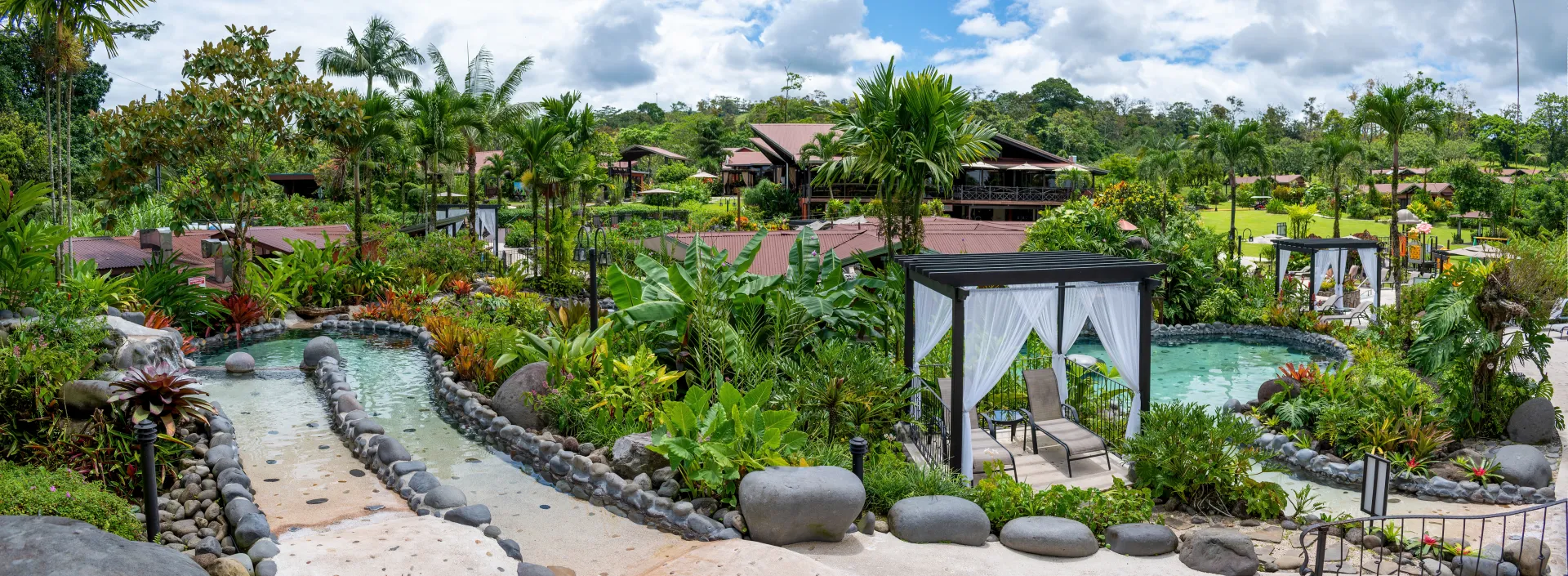
Built around a natural hot river that cascades through the property in a series of thermal pools and waterfalls, Tabacon Thermal Resort and Spa ★ 4.6 offers a more accessible entry point to Arenal's luxury market. The thermal experience itself is the primary draw: you can spend hours moving between pools of varying temperatures, surrounded by tropical gardens with the volcano looming above. Rooms are comfortable and recently renovated, though they lack the architectural ambition of Nayara. The spa incorporates thermal waters into many treatments. This is an excellent choice for travellers who want the hot spring experience as a centrepiece of their stay without Nayara's price point. Rates begin around USD 400 per night.
Choosing Your Regions
The most rewarding Costa Rica itineraries combine at least two contrasting regions. A common luxury routing might pair four nights at Peninsula Papagayo or Nosara (beach, sunshine, relaxation) with two nights in Arenal (volcanic highlands, hot springs, adventure) and two nights on the Osa Peninsula (intense wildlife, jungle immersion). Domestic flights on small aircraft connect these regions efficiently, typically in under an hour, making multi-stop itineraries practical even on a week-long trip.
Your choice ultimately depends on what you value most. If resort infrastructure and reliable weather are paramount, Peninsula Papagayo delivers at the highest standard. If wellness and transformation appeal, Nosara and the Nicoya Peninsula offer world-class programming. If wildlife encounters matter above all else, the Osa Peninsula provides an experience unmatched anywhere in the Americas. And if you want a romantic, cocoon-like atmosphere enhanced by geothermal wonders, Arenal's volcanic highlands will not disappoint. Costa Rica's great gift to the luxury traveller is that all of these experiences exist within a single small country, connected by short flights and scenic drives through some of the most beautiful landscapes in the tropics.

More from Costa Rica