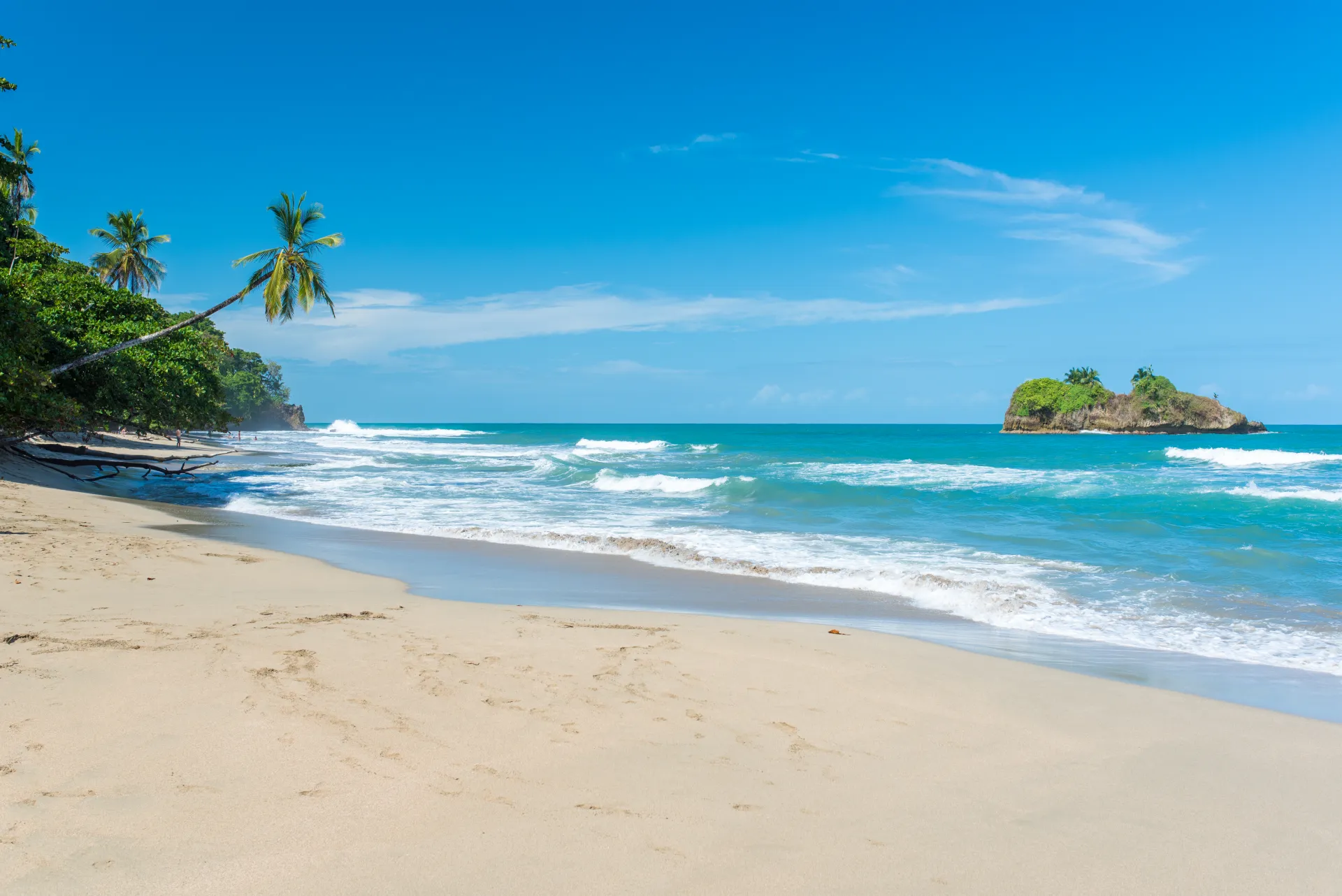
Best Beaches in Costa Rica
Costa Rica is not a country you visit for a single beach. It is a country where the coastline shifts character every fifty kilometres, from the dry, golden crescents of the northwest to the jungle-fringed Pacific breaks of the south, and across to the languid Caribbean shore where reef-protected waters lap against cocoa-coloured sand. The diversity is staggering for a nation smaller than West Virginia, and it means you can chase entirely different coastal experiences without ever leaving the country.
What separates Costa Rica's beaches from those of more obvious tropical destinations is wildness. Even the most developed stretches retain a sense of nature encroaching. Howler monkeys call from the tree canopy behind the sand. Scarlet macaws cross overhead. Sea turtles nest on beaches that double as national park territory. You are never far from something extraordinary here, and the coastline reflects that.
Guanacaste: The Pacific Gold Coast
The northwestern province of Guanacaste is Costa Rica's driest region, blessed with reliable sunshine from November through April and a concentration of upscale development that makes it the logical starting point for first-time visitors. The beaches here tend toward wide, calm, and golden, Caribbean in character if not in geography.
Playa Conchal
Playa Conchal earns its name honestly. The sand here is composed almost entirely of crushed seashells, giving it a distinctive pale pink-white colour and a texture unlike anything else on the Pacific coast. The water is remarkably clear for this side of the country: turquoise and calm, shelving gently into snorkelling depth within a few metres of shore.
Access is either through the Westin resort that backs the beach (guests walk straight out) or via a fifteen-minute walk south along the sand from Playa Brasilito, a more workaday fishing village with parking and a handful of sodas. That walk acts as a natural filter. By the time you reach Conchal proper, crowds have thinned considerably. Midweek in shoulder season, you may find yourself sharing the beach with a few dozen people at most.
The snorkelling along the rocky headlands at either end of the bay is excellent by Costa Rican standards: parrotfish, pufferfish, and rays are common sightings. Bring your own gear; there is no reliable rental operation on the beach itself.
Playa Flamingo
A decade ago, Flamingo was Costa Rica's most exclusive beach address. The marina attracted serious yachting money, and the hillside villas above the bay commanded prices that rivalled anything in the Caribbean. Development stalled during the recession and never quite recovered its former momentum, which means you now get a genuinely beautiful crescent of white sand without the density of visitors its infrastructure was built to handle.
The beach faces due west, making it one of the finest sunset positions in Guanacaste. The sand is soft and genuinely white, a rarity on the Pacific coast, where most beaches tend toward grey or gold. Swimming is safe year-round in the sheltered southern half, while the northern end picks up more swell and attracts the occasional surfer. Several excellent restaurants sit within walking distance on the hill above, and the town's boutique hotels offer a quieter alternative to the all-inclusive sprawl further south. If you are considering where to stay in this region, Flamingo rewards those who prefer a slower pace.
Nicoya Peninsula: The Surf Coast
South of Guanacaste, the Nicoya Peninsula juts into the Pacific with a character all its own. The roads are rougher, the development more scattered, and the beaches attract a crowd that prioritises waves, yoga, and solitude over poolside cocktails. This is Costa Rica at its most bohemian-luxe, a place where a world-class surf break sits minutes from a boutique hotel charging four hundred dollars a night.
Santa Teresa
Santa Teresa has transformed over the past decade from a backpacker secret into one of Central America's most coveted coastal addresses. The appeal is immediate: a long, unbroken stretch of sand backed by palms and low-rise development, with consistent surf that works on virtually any tide. The wave here is a beach break, forgiving enough for intermediates, punchy enough to keep advanced surfers engaged.
The town itself strings along a single unpaved road for several kilometres, which gives it a pleasantly diffuse quality. There is no centre, no promenade, no concentration of tourist infrastructure in one place. Instead, you discover boutique hotels, excellent restaurants, and surf shops spaced along the road at intervals, each with its own section of beach. The northern end (Playa Hermosa, confusingly sharing its name with several other Costa Rican beaches) tends quieter. The stretch in front of town proper draws the most energy.
Water temperature hovers around twenty-seven degrees year-round. The dry season (December to April) brings offshore winds that clean up the surf and guarantee sunshine. Green season delivers bigger swells and emptier lineups, though afternoon rain is a near-certainty.
Playa Guiones (Nosara)
Nosara's main beach is a seven-kilometre arc of pale sand backed by a biological corridor that prevents any construction within two hundred metres of the high-tide line. That buffer zone is the secret to Guiones' beauty: you see only jungle behind the sand, never buildings. It gives the beach a timeless, undeveloped quality that most of Costa Rica's popular stretches lost years ago.
The surf here is remarkably consistent and remarkably friendly. Guiones produces long, mellow waves that break over sand, making it one of the safest and most productive learning environments in Central America. The lineup is busy with surf schools in the morning, but by afternoon the crowd thins and intermediate surfers have ample space. At low tide the beach widens enormously, opening up vast stretches of firm sand for running or walking.
Behind the beach, Nosara has developed into a wellness hub of considerable sophistication. Yoga retreats, organic restaurants, and holistic health centres dot the hillside, attracting a clientele that splits roughly between surfers and those seeking quieter restoration. The two groups coexist comfortably. Neither dominates the character of the place.
Manuel Antonio: Jungle Meets the Pacific
Manuel Antonio National Park occupies a small headland on the central Pacific coast, and its beaches benefit from the park's protection in ways that are immediately visible. The forest grows right to the sand. White-faced capuchins descend to the waterline. Sloths hang in the trees above your towel. Nowhere else in Costa Rica delivers wildlife and beach in such intimate combination.
Playa Espadilla
The main public beach outside the national park gates, Playa Espadilla is a long, wide crescent that catches the full force of the Pacific. The sand is grey-gold and the surf can be substantial; riptides are a genuine concern here, particularly in the rainy season. Swim where the locals swim, and pay attention to the flags.
Despite the surf warnings, Espadilla has an undeniable energy. It is the most accessible beach in the Manuel Antonio area, fronted by restaurants and tour operators, and it fills up on weekends and holidays. Midweek visits in low season reward you with a different experience entirely: space, relative quiet, and the strange pleasure of having a nationally famous beach largely to yourself.
Playa Biesanz
Hidden around the headland from Espadilla, Playa Biesanz requires either a short boat ride or a ten-minute walk through forest from a small car park that many visitors drive straight past. The reward for that minor effort is a sheltered cove with calm, clear water, arguably the best swimming beach in the Manuel Antonio area.
The bay faces away from the open Pacific, which means the surf that batters Espadilla never reaches here. You can snorkel the rocky margins with reasonable visibility, and the beach itself remains genuinely uncrowded even when the national park beaches are at capacity. There are no facilities whatsoever: no vendors, no loungers, no lifeguards. Bring water, sun protection, and a snorkel if you have one.
Biesanz represents the quieter side of Manuel Antonio, a reminder that even in Costa Rica's most visited coastal region, solitude is available to those willing to look slightly beyond the obvious.
Osa Peninsula: The Wild South
The Osa Peninsula is Costa Rica's last frontier. National Geographic once called it the most biologically intense place on Earth, and that intensity extends to the coastline. Beaches here are not manicured or convenient. They are wild, remote, and often accessible only by boat or small plane. The reward is a coastal experience unlike anything else in the country: raw, uncrowded, and profoundly connected to the rainforest that presses against the shore.
Playa Drake
Drake Bay sits on the northern edge of the Osa Peninsula, reachable by boat from Sierpe or by small aircraft from San Jose. The beach itself is a dark-sand crescent facing the open Pacific, framed by jungle-covered headlands. It is not a postcard beach in the conventional sense: the sand is volcanic grey, the water can be murky after rain, and the surf makes swimming inadvisable on bigger days.
What Drake offers instead is immersion. This is the staging point for expeditions into Corcovado National Park, for diving at Cano Island, and for whale-watching between July and October when humpbacks migrate through the offshore waters. The beach is where your boat departs at dawn and where you return at dusk, salt-crusted and exhilarated. Several upscale eco-lodges perch on the hillside above, offering a level of comfort that belies the remoteness of the setting.
Playa Corcovado
Deep within Corcovado National Park, this beach is accessible only on foot (a demanding multi-hour trek through primary rainforest) or by boat from Drake Bay with a park-licensed guide. There are no facilities, no infrastructure, and frequently no other people. What you find instead is kilometres of untouched sand backed by some of the most pristine lowland tropical forest remaining in the Americas.
Tapirs have been spotted on this beach. Jaguars leave prints in the sand. Bull sharks patrol the river mouths. This is not a beach for swimming or sunbathing in any conventional sense. It is a beach for witnessing nature at its most uncompromised. The experience of walking this coastline, completely alone, with the forest cacophony at your back and the Pacific stretching to the horizon, ranks among the most powerful coastal encounters available anywhere in the tropics.
Caribbean Coast: A Different Country Entirely
Cross the continental divide and you enter a different Costa Rica. The Caribbean coast receives rain when the Pacific is dry, operates on its own cultural rhythm (Afro-Caribbean rather than mestizo), and offers beaches with a character that belongs more to Jamaica or Belize than to anything on the other side of the mountains.
Playa Cocles
South of Puerto Viejo, Playa Cocles is the Caribbean coast's standout beach: a long sweep of golden sand backed by coconut palms and jungle, with reef-protected water that ranges from glass-calm to genuinely powerful depending on the season. Between March and October, the waves here attract a small but dedicated surf community; the rest of the year, the sea flattens to swimming-pool stillness.
The sand is a warm gold, finer than the Pacific beaches and maintained by a community that takes genuine pride in its coastline. Behind the beach, the road to Manzanillo passes a string of Caribbean-influenced restaurants, reggae bars, and small boutique properties. The pace is emphatically unhurried. Nobody rushes here. Hammocks outnumber sun loungers. Fresh coconut water is more readily available than cocktails.
What makes Cocles special beyond its physical beauty is the cultural dimension. This is Afro-Caribbean Costa Rica: the food is different (rice and beans cooked in coconut milk, jerk-spiced fish, patacones), the music is different (reggaeton, calypso, roots reggae drifting from open-air bars), and the attitude toward time is magnificently relaxed. A day at Cocles is not just a beach day; it is an immersion in a corner of Costa Rica that most Pacific-coast visitors never experience.
Choosing Your Coast
The Pacific northwest delivers reliability: sunshine, calm water, and accessible luxury. The Nicoya Peninsula offers character and surf. Manuel Antonio combines wildlife with convenience. The Osa brings genuine wildness for those willing to sacrifice comfort. And the Caribbean rewrites every assumption you arrived with.
Most visitors with the time and budget to explore properly will want at least two of these regions on a single trip. A week splitting between Guanacaste and the Osa, or between the Nicoya Peninsula and the Caribbean, reveals a country that defies simple categorisation. Each coast is its own argument for returning.

More from Costa Rica