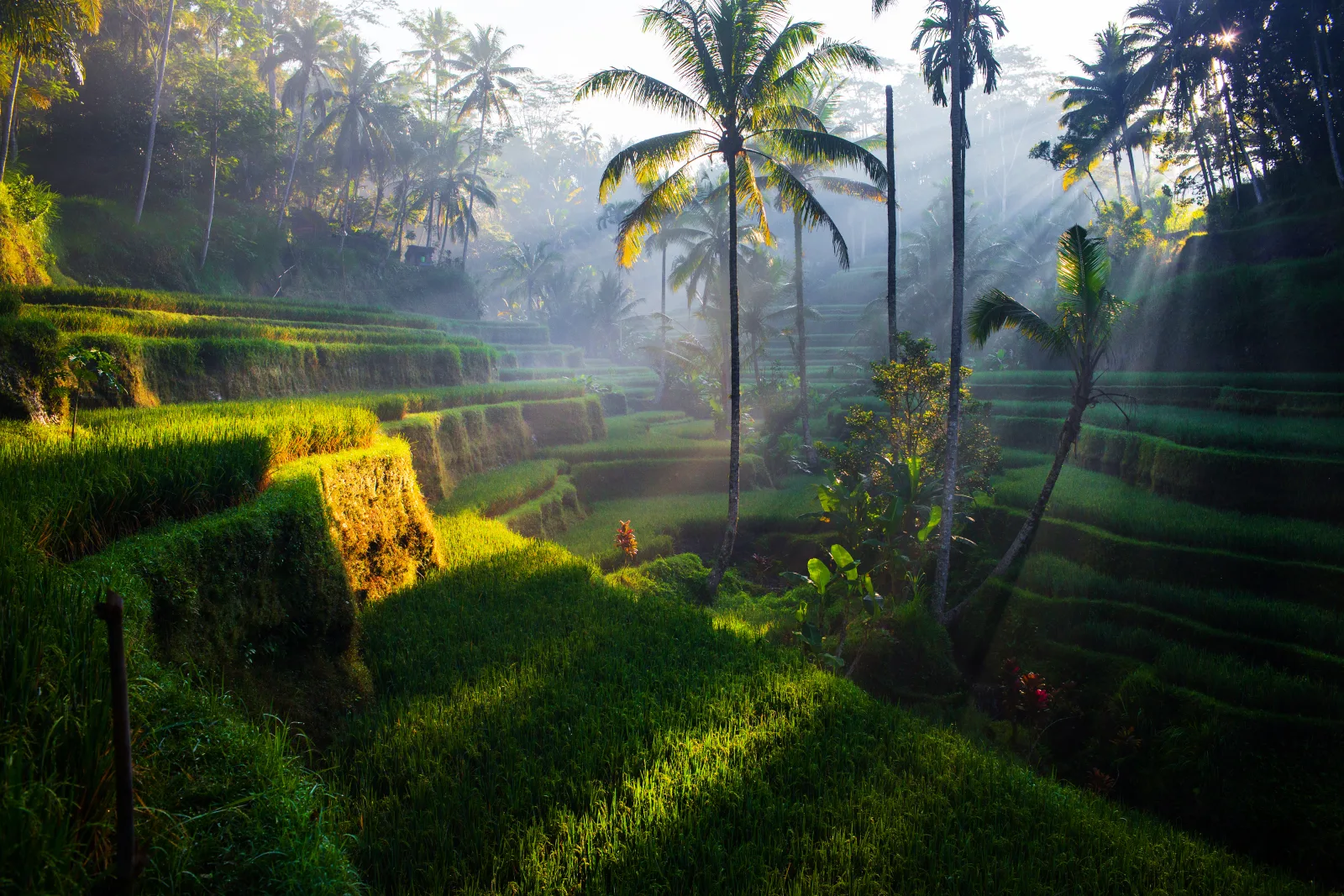
Bali
The Island of the Gods, where emerald rice terraces meet ancient temples and world-class hospitality.
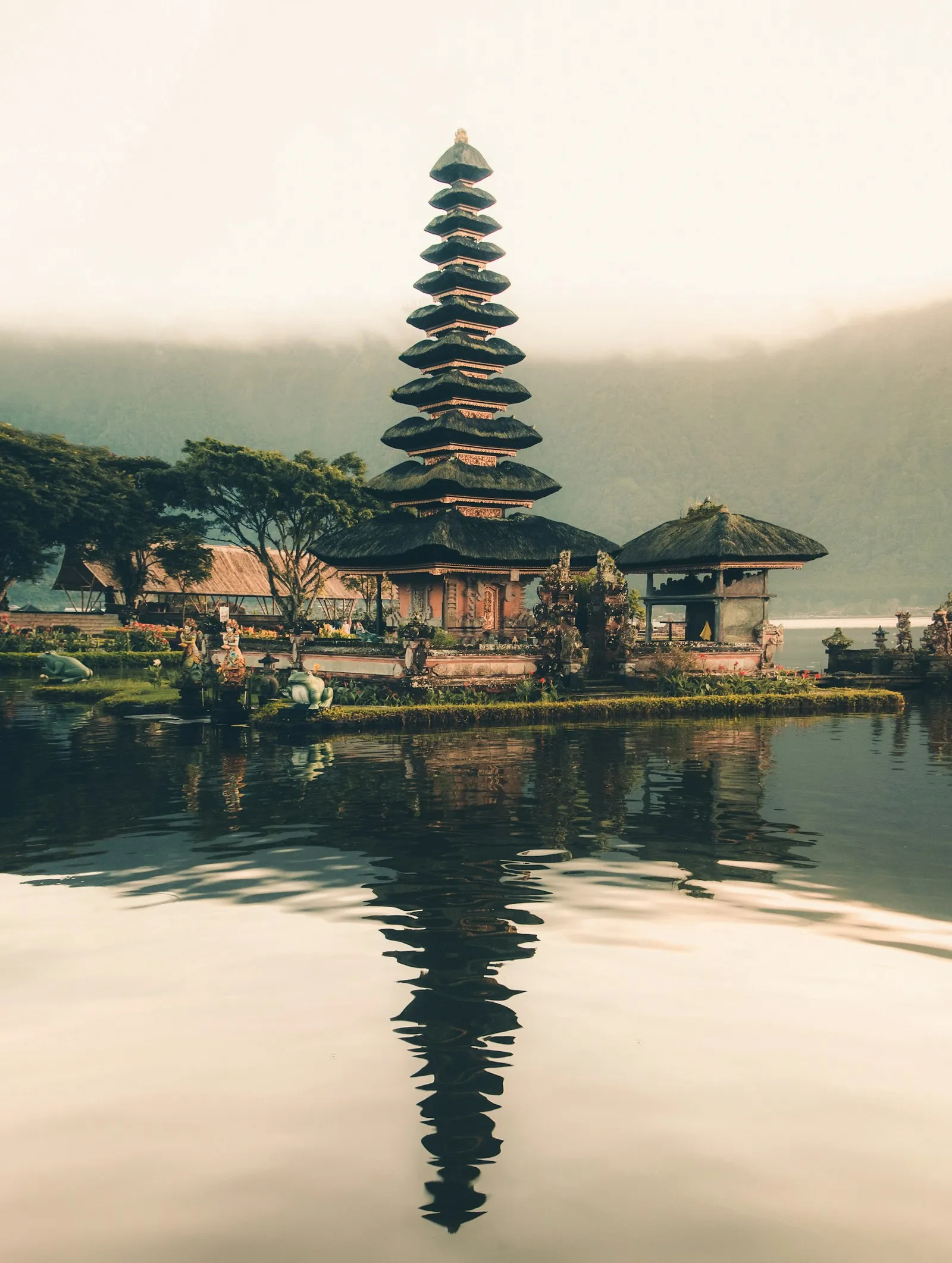
Beyond the well-trodden tourist paths, Bali is an island of considerable depth. The artistic heart of Ubud, the volcanic beaches of the north coast, hidden waterfall temples, and some of Asia's finest restaurants all sit within a few hours' drive of each other. That range, compressed into an island roughly 140 kilometres across, is what keeps drawing travellers back. The Bali travel guide is the place to start planning: when to come, how to get around, and which area to base yourself in.
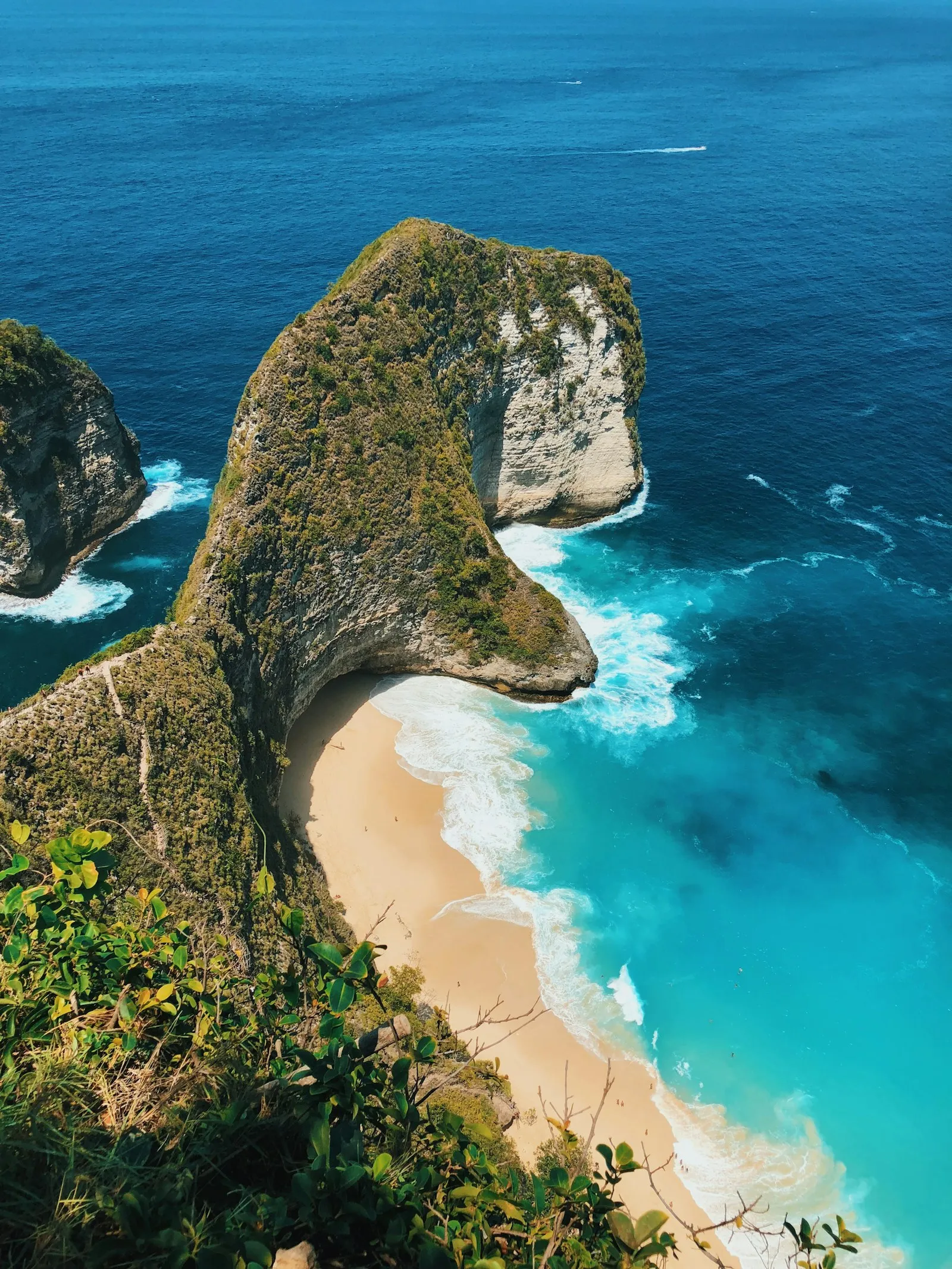
The southern coastline holds most of the beach action. Seminyak's long, dark-sand stretch runs into a string of sunset bars and boutiques, while the Bukit Peninsula to the south delivers dramatic cliffside scenery and surf breaks like Uluwatu and Padang Padang. Nusa Dua keeps things polished with calm, reef-protected water and manicured resort grounds. For something quieter, the black volcanic sands of Lovina on the north coast see a fraction of the crowds, and the snorkelling around Amed in the east rivals anything in Southeast Asia. The best beaches guide maps the coastline in full.
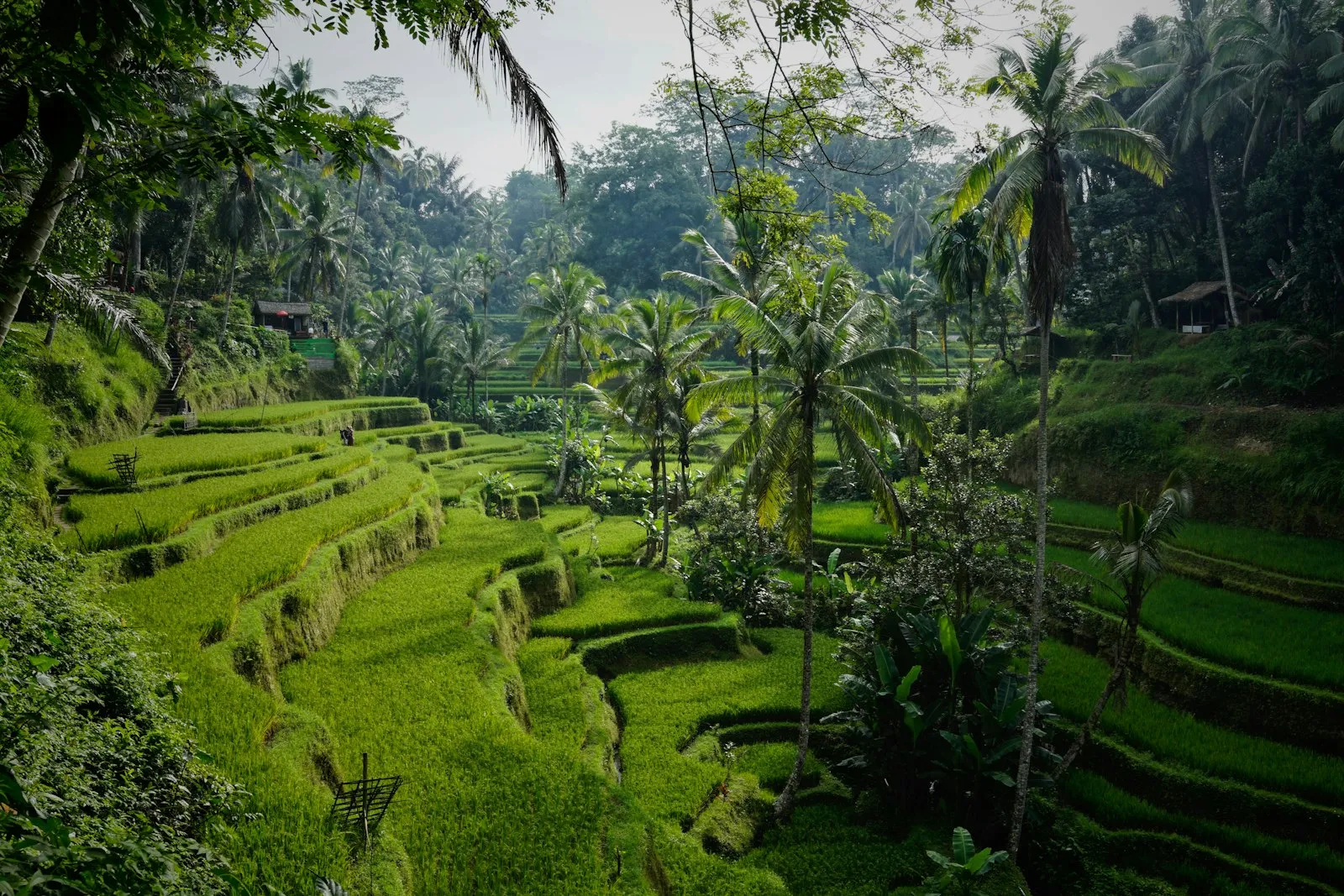
Ubud sits inland among terraced rice paddies and river gorges, and operates at a different pace entirely. The town's galleries, craft workshops and daily temple ceremonies give it a creative and spiritual energy that the coastal areas don't attempt to match. It's also where many of the island's most ambitious restaurants have set up, drawing on Balinese, Javanese and modern Asian flavours alongside produce grown in the surrounding highlands.
Bali's hotel scene spans an extraordinary range. At the top end, properties like Aman Villas at Nusa Dua, the Bulgari Resort on the Bukit cliffs, and Four Seasons at Sayan (built into a river valley near Ubud) compete with the best in Asia. But the island also supports a deep pool of private villas with pools, full staff, and rice-paddy views at prices that would barely cover a room in the Maldives. That value proposition, paired with genuine warmth from the Balinese, is a large part of the island's pull. The where to stay guide breaks down each area and its best hotels.
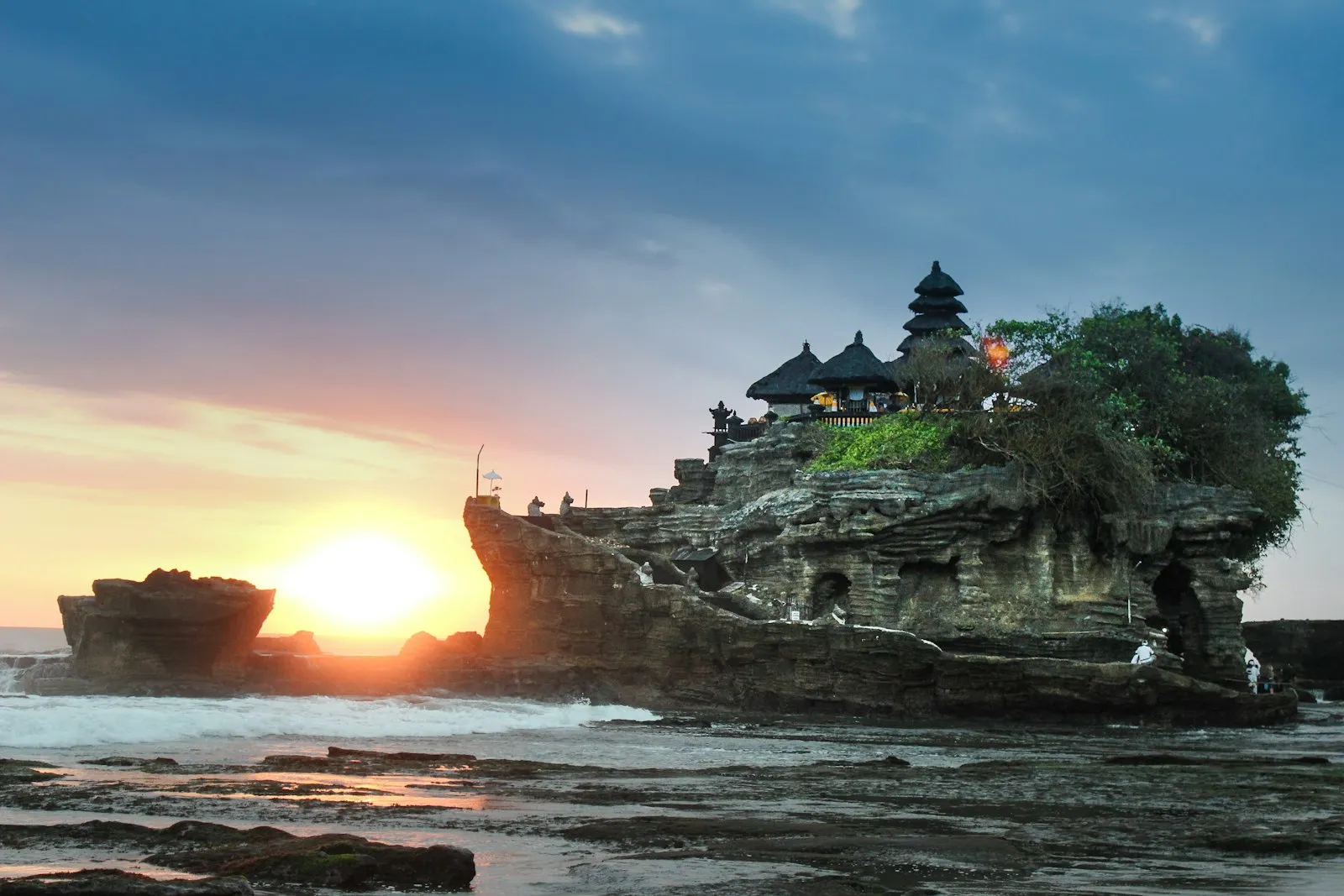
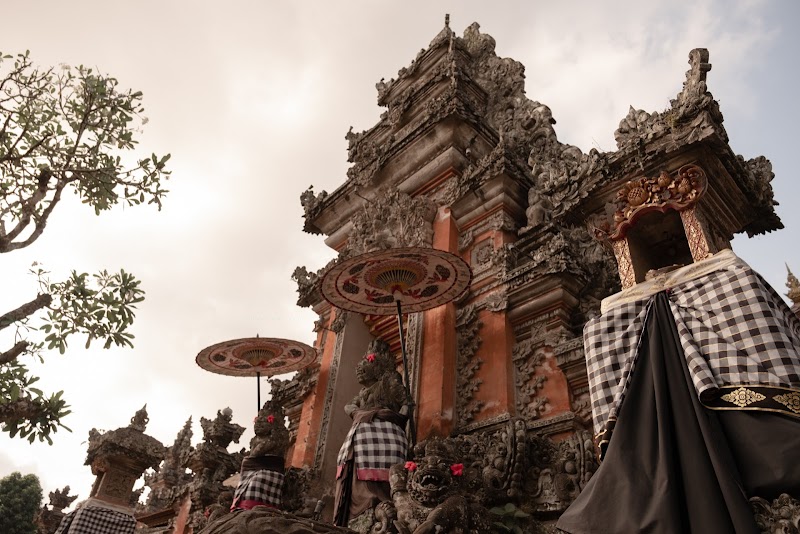
The Hindu culture here shapes every aspect of daily life. Canang sari (small palm-leaf offering baskets filled with flowers and incense) line the pavements each morning. Temple ceremonies close roads without notice. Nyepi, the Day of Silence in March, shuts the entire island down for 24 hours, including the airport. Rather than obstacles, these rhythms are part of what sets Bali apart from any other tropical destination in the region.

Explore Bali

Bali Directory
Curated restaurants, hotels, beaches, and villas in Bali.
Hotel
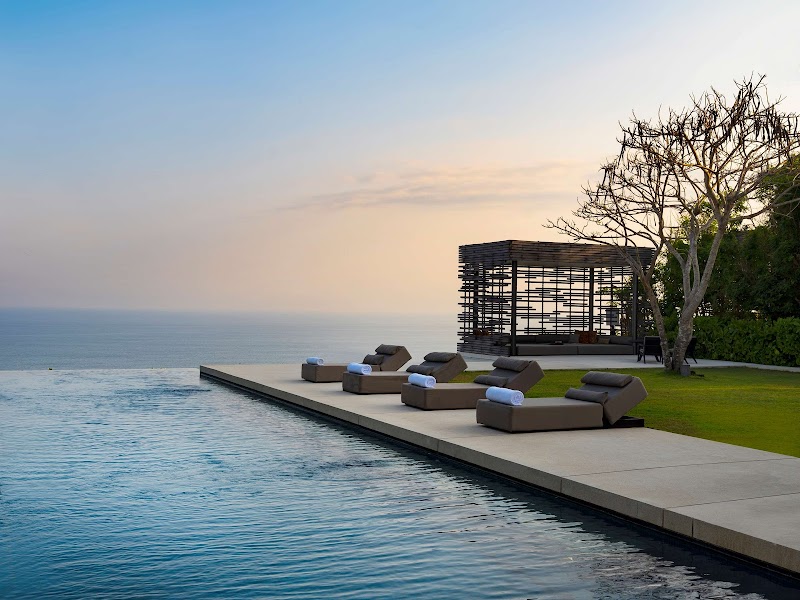
Alila Villas Uluwatu
Alila Villas Uluwatu made its name as the clifftop resort that proved Bali could do cutting-edge contemporary architecture. Designed by WOHA, the Singaporean firm known for gravity-defying tropical buildings, it is a study in clean lines, infinity edges, and a cage-like bamboo structure that houses , the resort's Indonesian restaurant.
Restaurant
Apéritif
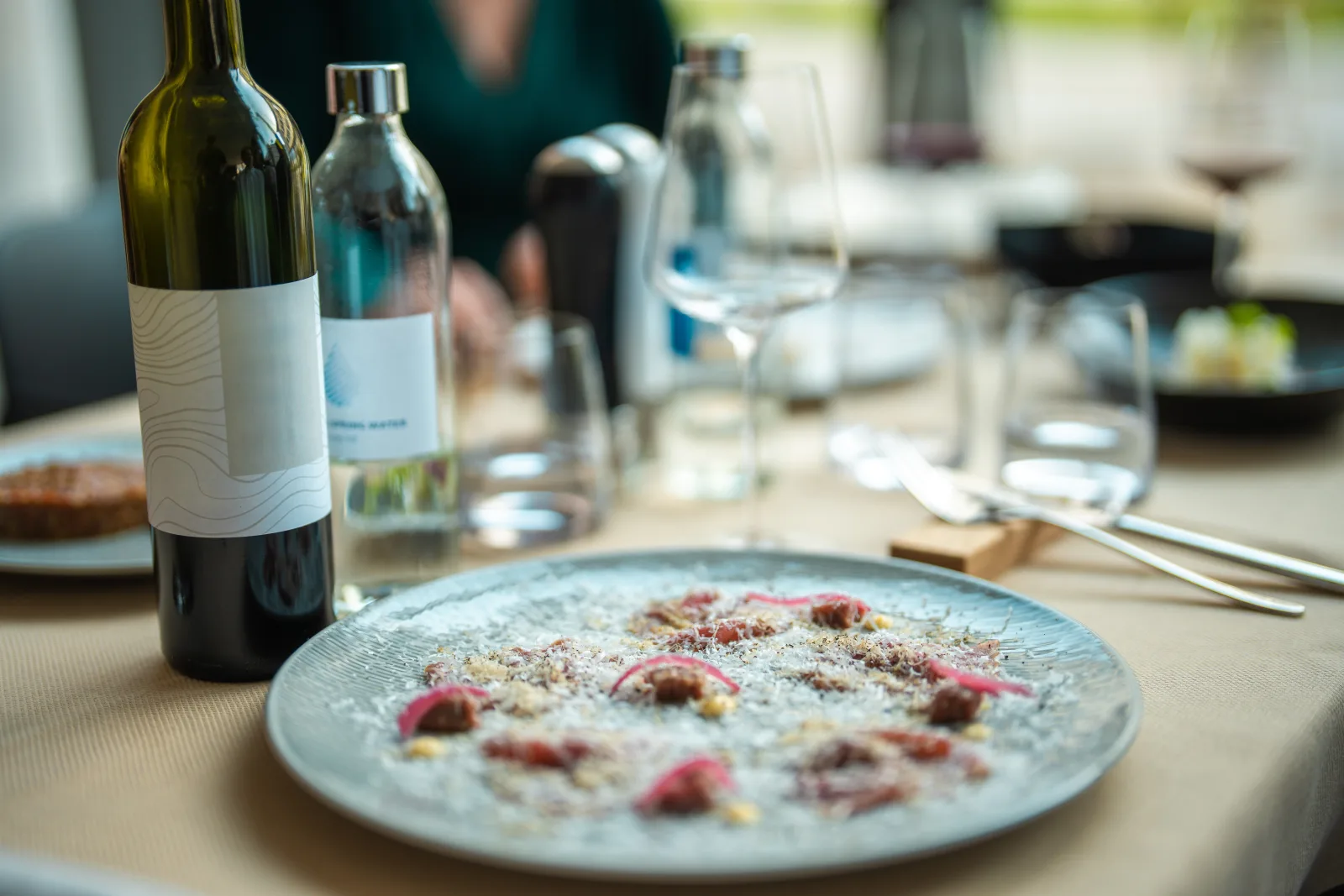
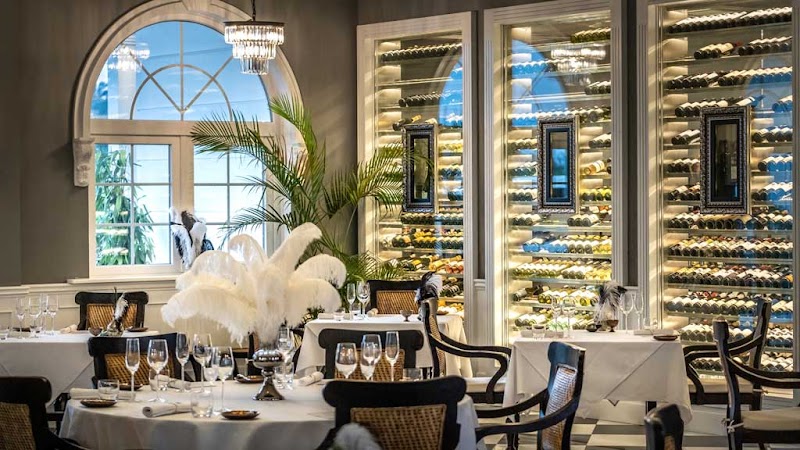
Apéritif is the fine-dining restaurant at Viceroy Bali, set above the Petanu River valley a short drive from central Ubud. The room is styled after a 1920s colonial dining salon, with its own bar. Executive chef Nic Vanderbeeken, who is Belgian, applies European technique to Indonesian ingredients. Tatler Best Indonesia named it one of the country's 20 best restaurants in both 2025 and 2026.
Hotel
Ayana Resort Bali
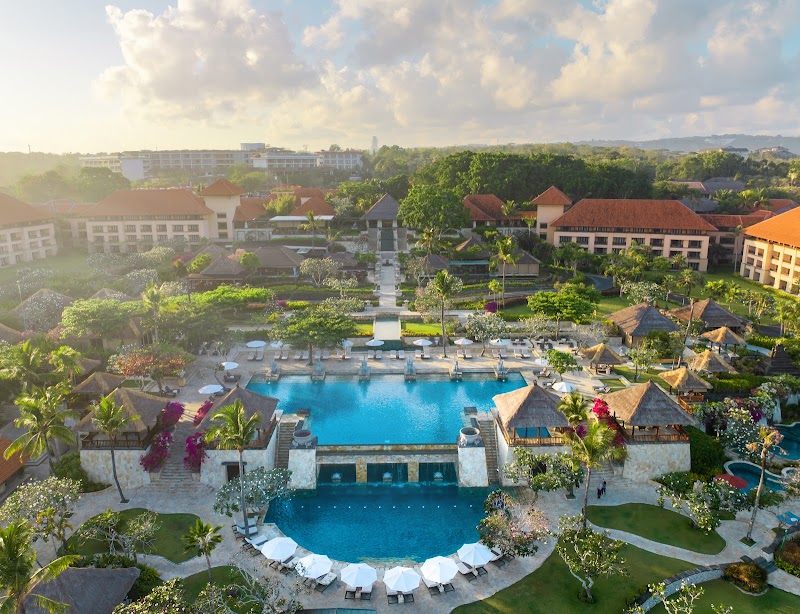
Ayana occupies a vast clifftop estate above Jimbaran Bay, with around 290 rooms spread across three connected properties: Ayana Resort, Ayana Segara, and the ultra-premium Ayana Villas. The scale is larger and less intimate than the neighbouring Four Seasons, but the facilities are staggering: a dozen restaurants, a private beach, an enormous spa, and Rock Bar, possibly the most famous bar in Bali, built on natural rocks at the base of the cliff.
Hotel
Capella Ubud
Capella Ubud is the most distinctive hotel in Bali and one of the most original anywhere. Designed by Bill Bensley, the architect behind some of Asia's most theatrical properties, it reimagines a glamorous 1800s colonial-era camp through Bensley's signature maximalist wit. The 22 tented retreats and single lodge are scattered through dense rainforest, each one a fantasia of antique furniture, handpicked curiosities, and deliberate excess.