Things to Do on the Amalfi Coast
The Amalfi Coast occupies barely 50 kilometres of southern Italian shoreline, but the density of things worth doing here rivals places ten times the size. This is a stretch of coast where a single day can include a morning boat ride to a sea cave, lunch at a harbourside trattoria, an afternoon in a 13th-century cathedral, and an evening drive along a road that is itself considered one of Europe's great experiences. The terrain, almost entirely vertical, compresses everything into close proximity. Villages that appear distant from the road are a ten-minute ferry ride apart by water.
The challenge is not finding things to do but deciding what to prioritise. A week here fills easily, and the temptation to cram every day will compete with the equally valid instinct to spend an afternoon doing nothing at all on a quiet beach with a cold Peroni and the sound of waves against pebbles.
The Coast Road (SS163)
Driving the Amalfitana
The Strada Statale 163, the single road connecting Vietri sul Mare to Positano, is one of the legendary drives in Europe. Built in the mid-19th century along a route that follows Roman and medieval paths, the road clings to cliff faces, passes through short tunnels carved into rock, and rounds blind corners above sheer drops to the sea. The views are extraordinary. The driving is not for the nervous.
The road is narrow, roughly one and a half lanes wide in most sections, and shared by cars, buses, scooters, and delivery vehicles. Two full-size vehicles passing each other requires mirrors to fold, nerves to hold, and occasionally one party to reverse. SITA buses run the entire route and their drivers navigate the road with a casual expertise that borders on the theatrical.
Drive east to west (Vietri to Positano) for the best views, as the seaward lane keeps you on the cliff edge. Allow at least two hours for the 50-kilometre route, more if stopping. Early morning or late afternoon avoids the worst traffic. The road is busiest between 10:00 and 16:00 in summer.
Belvedere Viewpoints
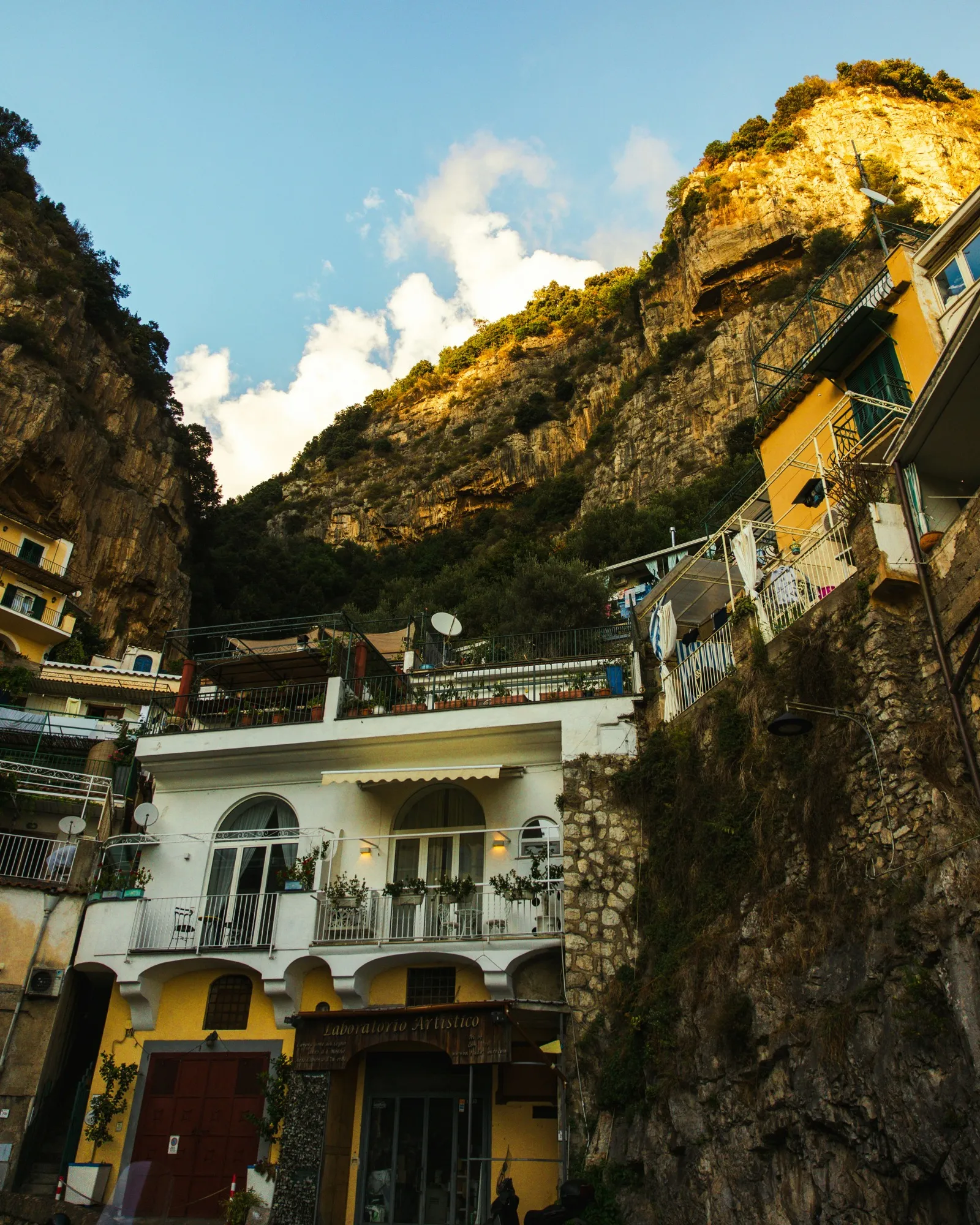
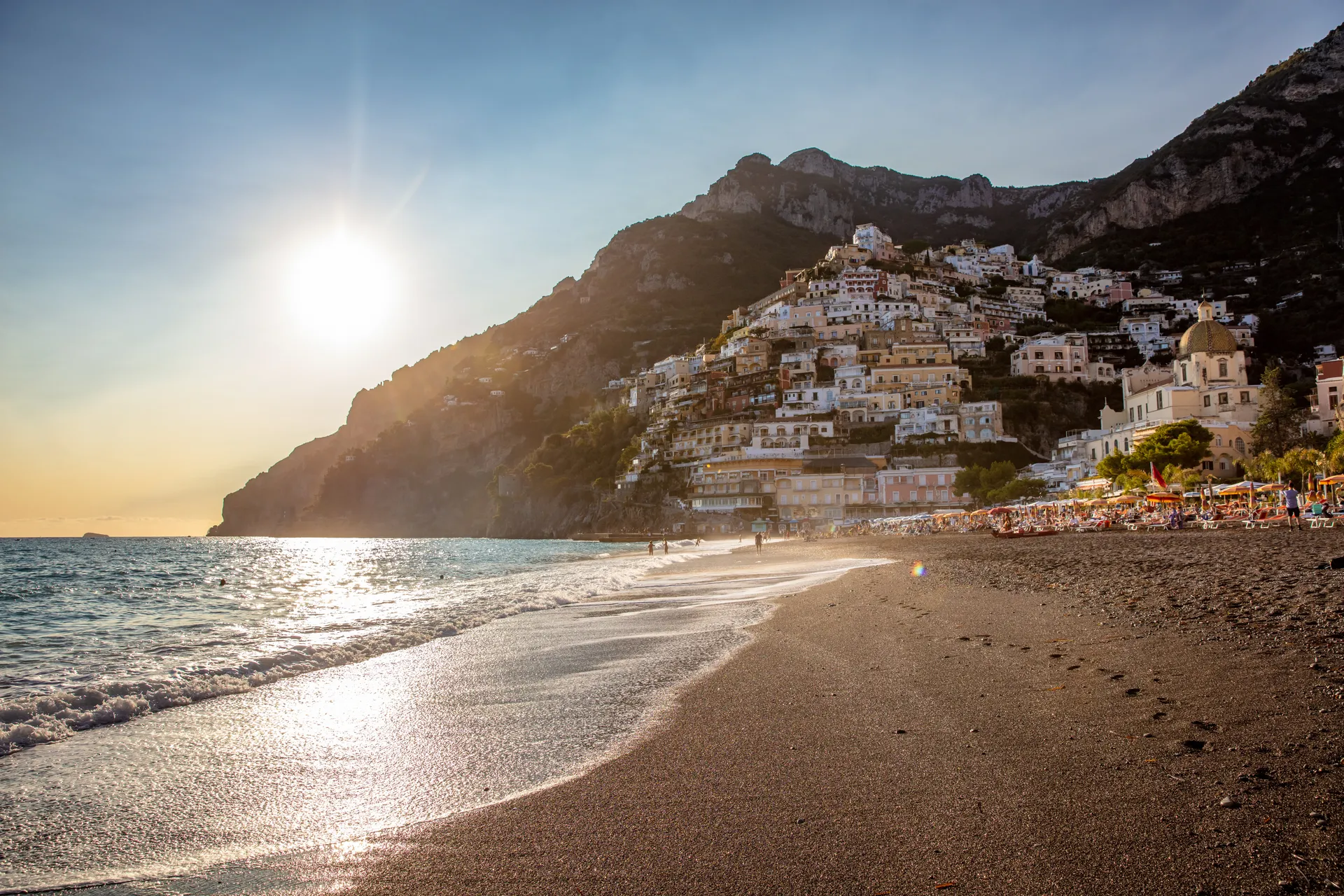
Several formal viewpoints along the SS163 offer safe stopping points for photographs. The belvedere above Conca dei Marini provides a sweeping panorama of the central coast. The viewpoint at the curve above Praiano frames the village against the sea. And the first view of Positano, approaching from the east, where the village appears suddenly as the road rounds a headland, is one of those moments that justifies the entire drive.
Boat Trips
Amalfi to Capri
The island of Capri sits roughly 17 kilometres offshore from the Amalfi Coast, and regular ferries connect Amalfi and Positano to the island throughout the summer. The crossing takes 50 to 80 minutes depending on the vessel and departure point. Day trips to Capri are straightforward: an early ferry out, a day exploring the island, and a late afternoon return.
Capri rewards a full day. The chairlift to Monte Solaro from Anacapri (12 minutes, €12 return) delivers the best panorama in the Bay of Naples. The Augustus Gardens in Capri town overlook the Faraglioni rock stacks. The Blue Grotto, accessible by small rowing boat (around €18 entry), is crowded and commercialised but still beautiful when the light is right. Lunch at a restaurant in Anacapri, away from the designer-shop strip of Capri town, offers better value and a more local atmosphere.
Private Boat Hire
Hiring a small boat (a gozzo, the traditional wooden boats of the coast) is the single best way to experience the Amalfi shoreline. Rental operators in Amalfi, Positano, and Praiano offer self-drive boats (no licence required for engines under 40hp) from around €120 per half day, or skippered boats from €250.
A typical half-day route from Amalfi covers the Emerald Grotto, the coves below Conca dei Marini, the Fiordo di Furore from the water, and swimming stops in the hidden inlets between Praiano and Positano. Pack a cooler with drinks and sandwiches, bring snorkelling gear, and allow the day to unfold. The coast seen from the water, with its scale and colours fully revealed, is a different place entirely from the one visible from the road.
Emerald Grotto (Grotta dello Smeraldo)
Located near Conca dei Marini, the Emerald Grotto is a sea cave where sunlight enters through an underwater opening and illuminates the water in vivid green. The effect is genuinely striking, particularly around midday when the light is strongest. Access is by lift or stairs from the coast road, followed by a short rowing boat tour of the cave interior (around €5 entry).
The visit takes 15 to 20 minutes. It's brief, but the colour of the water inside the cave is unlike anything else on the coast. Combine it with a swim at Conca dei Marini's beach or a stop at one of the viewpoints above.
Walking and Hiking
Path of the Gods (Sentiero degli Dei)
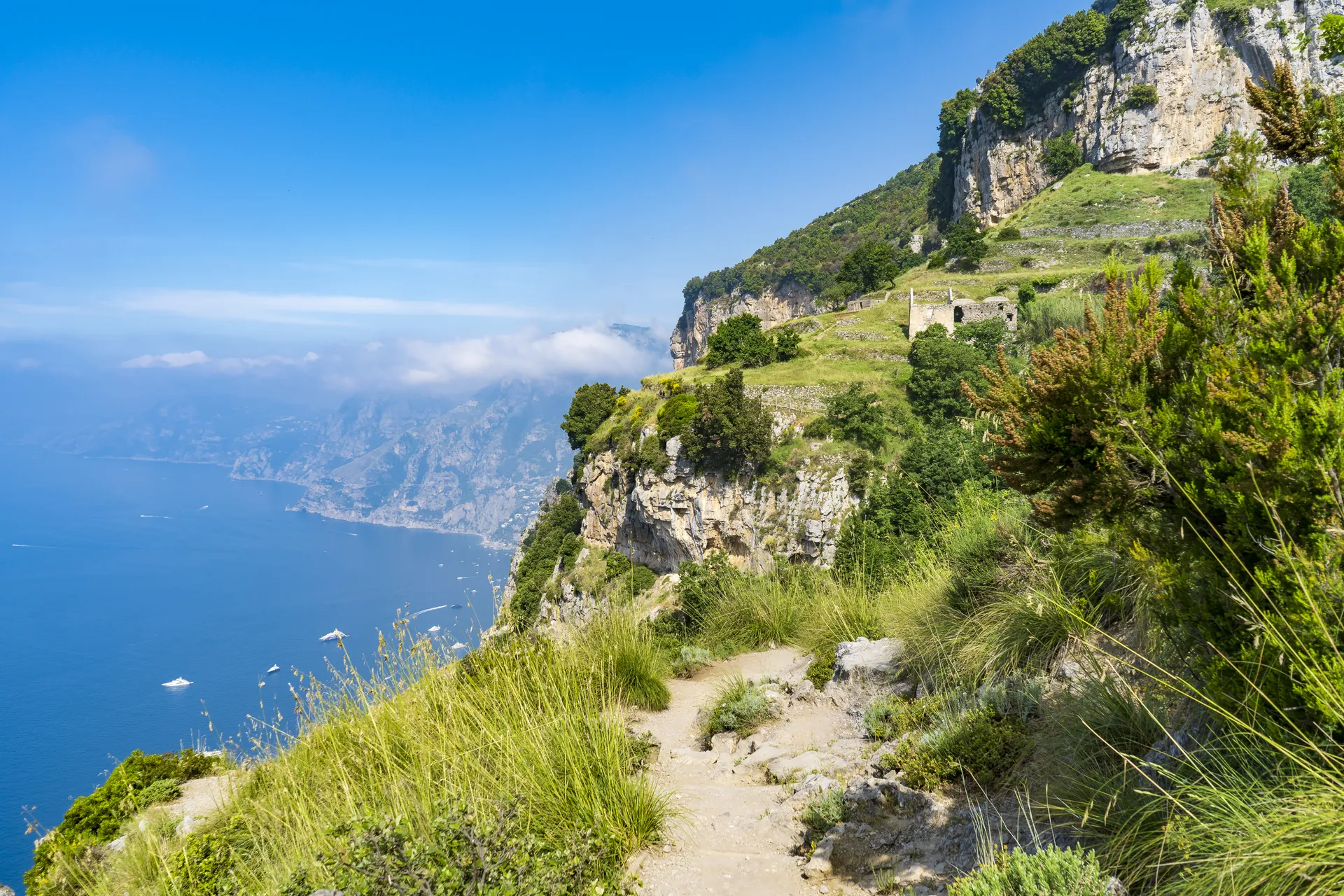
The most celebrated walk on the Amalfi Coast, the Path of the Gods runs along the ridge high above the coastline from Agerola (specifically the hamlet of Bomerano) to Nocelle, a village perched 450 metres above Positano. The path covers roughly 7.8 kilometres and takes three to four hours at a comfortable pace. The views are spectacular throughout: the entire coast is laid out below, with Capri visible offshore and the Cilento coast stretching south.
The trail is well marked and mostly follows a downhill gradient from Bomerano (630m) to Nocelle (440m). It's not technically difficult, but sections are exposed with steep drop-offs and no guardrails. Proper footwear (hiking boots or trail shoes, not sandals) is essential. Bring at least a litre of water per person and sun protection. There is no shade on most of the route.
From Nocelle, a long staircase of roughly 1,700 steps descends to Positano (allow 30 to 45 minutes), or a local bus connects to the coast road. The logistics work best as a one-way walk: bus from the coast to Bomerano, hike to Nocelle, descend to Positano, ferry back to your base.
Walk in the morning. The afternoon heat in summer makes the exposed sections uncomfortable, and the light is better for photographs with the sun behind you, illuminating the coast.
Valle delle Ferriere
A cooler, shadier alternative to the Path of the Gods, the Valle delle Ferriere is a protected nature reserve in the valley above Amalfi town. The trail follows a stream through dense vegetation, past waterfalls, and through the remains of medieval iron mills (ferriere) and paper mills that once powered Amalfi's economy. The microclimate in the valley is notably cooler and damper than the coast, and the lush fern growth includes species more commonly found in tropical environments.
The walk from Amalfi's main square to the reserve and back takes around three hours. The path is shaded throughout, making it a good option on hot days when the exposed coastal trails are uncomfortable. Entry to the reserve costs €5.
Ravello to Minori Walk
A less well-known but rewarding walk connects the hilltop village of Ravello to the coastal town of Minori via an ancient mule path through lemon groves and terraced gardens. The path descends roughly 350 metres over 2 kilometres, passing through the hamlet of Torello and its Romanesque church (the Annunziata, with fragments of 13th-century frescoes worth a brief stop).
The walk takes about 45 minutes downhill. At the bottom, Minori's small beach and the Roman Villa Antiquarium (a well-preserved 1st-century seaside villa with intact mosaics) provide reasons to linger before catching a bus or ferry back.
Cultural Sights
Amalfi Cathedral (Duomo di Sant'Andrea)
The Cathedral of St. Andrew dominates the main square of Amalfi town, its striped Moorish facade rising above a steep flight of steps. The building dates from the 9th century but has been reworked repeatedly, producing an architectural style that mixes Arab-Norman, Romanesque, Baroque, and Gothic elements. The adjacent Cloister of Paradise (Chiostro del Paradiso), a 13th-century arcade of interlaced arches around a garden of palms, is the architectural highlight. Entry to the cathedral complex (including the crypt, which holds the relics of St. Andrew) costs €3.
Villa Rufolo, Ravello
Ravello sits 350 metres above the coast, reached by a winding road from Amalfi or Minori. The village's two famous villas are its primary attractions. Villa Rufolo, in the centre of Ravello overlooking the piazza, dates from the 13th century and is best known for its terraced gardens, which provided the inspiration for the enchanted garden in Wagner's Parsifal. The annual Ravello Festival holds concerts on a temporary stage cantilevered over the garden, with the coast as a backdrop. Entry is around €10.
Villa Cimbrone, Ravello
A ten-minute walk from Ravello's centre, Villa Cimbrone is a 20th-century estate built on medieval foundations. The gardens extend along a ridge to the Terrace of Infinity (Terrazza dell'Infinito), a belvedere lined with marble busts that offers what is commonly described as the finest view on the Amalfi Coast. On a clear day, the panorama extends from Paestum in the south to the Cilento peninsula. The gardens themselves are formal and well maintained, with rose gardens, grottoes, and temples scattered through the grounds. Entry costs around €10.
Museo della Carta, Amalfi
Amalfi was one of Europe's first centres of paper production, importing the technology from the Arab world in the 13th century. The Paper Museum, housed in a former paper mill in the valley behind Amalfi town, demonstrates the traditional process of making paper from cotton rag using water-powered machinery that still functions. The guided tours (available in English) are informative and take about 45 minutes. Entry is €4.50. It's a genuinely interesting stop that provides context for Amalfi's medieval prosperity.
Lemon Groves and Local Produce
Lemon Grove Tours
The Sfusato Amalfitano, the large, sweet lemon unique to this coastline, is cultivated on steep terraces throughout the coast's villages. Several farms offer guided tours of their groves, typically lasting an hour, with explanations of the traditional cultivation methods (including the pergola structures of chestnut wood that protect the fruit from wind and cold). Tours usually conclude with tastings of limoncello, lemon cake, and lemon granita.
Oscar's Lemon Grove in Minori and the Lemon Experience Garden in Amalfi are two reliable options. Expect to pay €10-15 per person. The best months for lemon season are February through October, with the main harvest in June and July.
Ceramic Workshops, Vietri sul Mare
The eastern gateway to the Amalfi Coast, Vietri sul Mare has been producing hand-painted ceramics since the 15th century. The colourful majolica tiles that decorate churches, fountains, and house facades along the entire coast originate here. Several workshops offer demonstrations and sales, with prices considerably lower than the souvenir shops in Positano and Amalfi.
Ceramica Artistica Solimene, housed in a distinctive glass-fronted building by the architect Paolo Soleri, is the largest and most prominent. Smaller workshops along Via Madonna degli Angeli offer more personal experiences. Budget an hour or two, and bring a sturdy bag for purchases.
Evening Experiences
Sunset from Ravello
The western-facing position of Ravello's terraces makes the village the best sunset viewpoint on the coast. The Terrace of Infinity at Villa Cimbrone and the gardens at Villa Rufolo both offer front-row positions, though both close before the latest summer sunsets. The public viewpoints along Via della Repubblica and the piazza in front of the Duomo are free alternatives with equally good sightlines.
Combine a sunset visit with dinner at Rossellinis or Cumpa Cosimo for a complete Ravello evening.
Concerts and Events
The Ravello Festival runs from late June through early September, staging classical concerts, jazz performances, and film screenings in the gardens of Villa Rufolo. The main-stage concerts, held on the belvedere platform with the coast below, are among the most atmospheric live music settings in Europe. Tickets range from €30 to €120 and sell quickly for headline performances.
Amalfi hosts a regatta every June (the Regata delle Antiche Repubbliche Marinare, shared annually with Venice, Genoa, and Pisa), which fills the harbour with historical boats and the town with crowds.
Planning Your Days
A week on the Amalfi Coast leaves room for all of the above without rushing. A workable sequence: drive the coast road on arrival day (stopping at viewpoints), a morning on the Path of the Gods, a full day by boat exploring the coves and the Emerald Grotto, a day in Ravello (Villa Rufolo, Villa Cimbrone, lunch, sunset), a day trip to Capri, a beach day at Fornillo or Atrani, and a final morning exploring Amalfi town's cathedral and paper museum before a lemon grove tour in Minori.
The ferry and bus networks make a car optional once you're settled, though having one expands your options for the eastern coast (Cetara, Vietri, Erchie) and the hilltop villages. Where you stay shapes the logistics considerably: Amalfi and Praiano offer the most central access, Ravello trades convenience for altitude and calm, and Positano provides the most walkable village experience.

More from Amalfi Coast