Things to Do in Santorini
Santorini is an island shaped by catastrophe. The Minoan eruption of around 1600 BC blew out the centre of a circular island, leaving behind a crescent-shaped caldera rim with sheer 300-metre cliffs plunging into deep, dark water. Everything that makes Santorini distinctive, the whitewashed villages perched on clifftops, the black and red volcanic beaches, the unique terroir that produces some of Greece's finest wines, follows from that geological event. The best things to do here engage with that history rather than simply passing through it.
This guide covers what's worth your time beyond the obvious sunset-and-cocktail routine. Plan around the best time to visit Santorini for optimal conditions, particularly for hiking and boat excursions.
The Caldera
The caldera is Santorini's defining feature, and spending time on, in, and above it should anchor any visit.
The Fira to Oia Hike
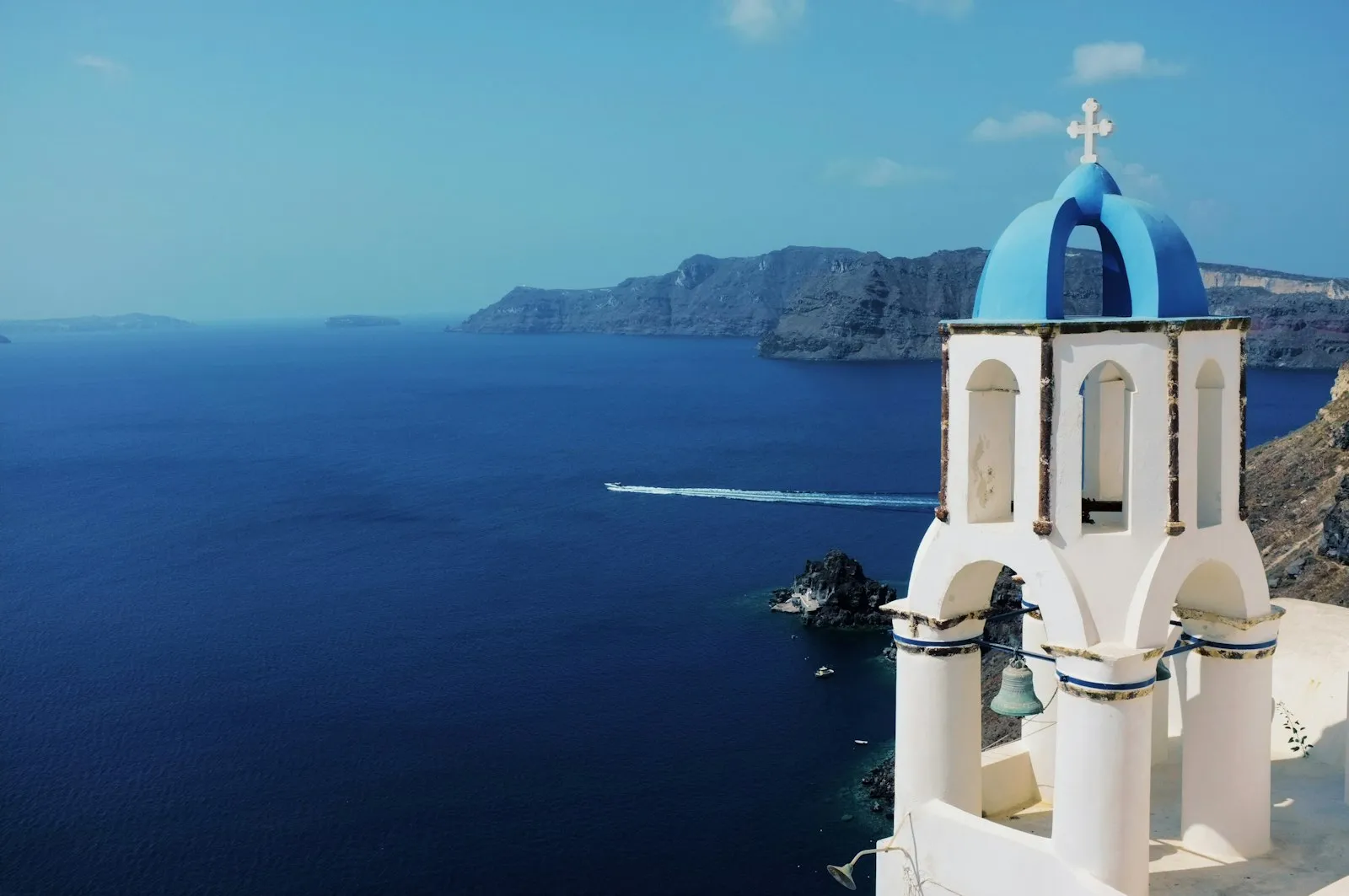
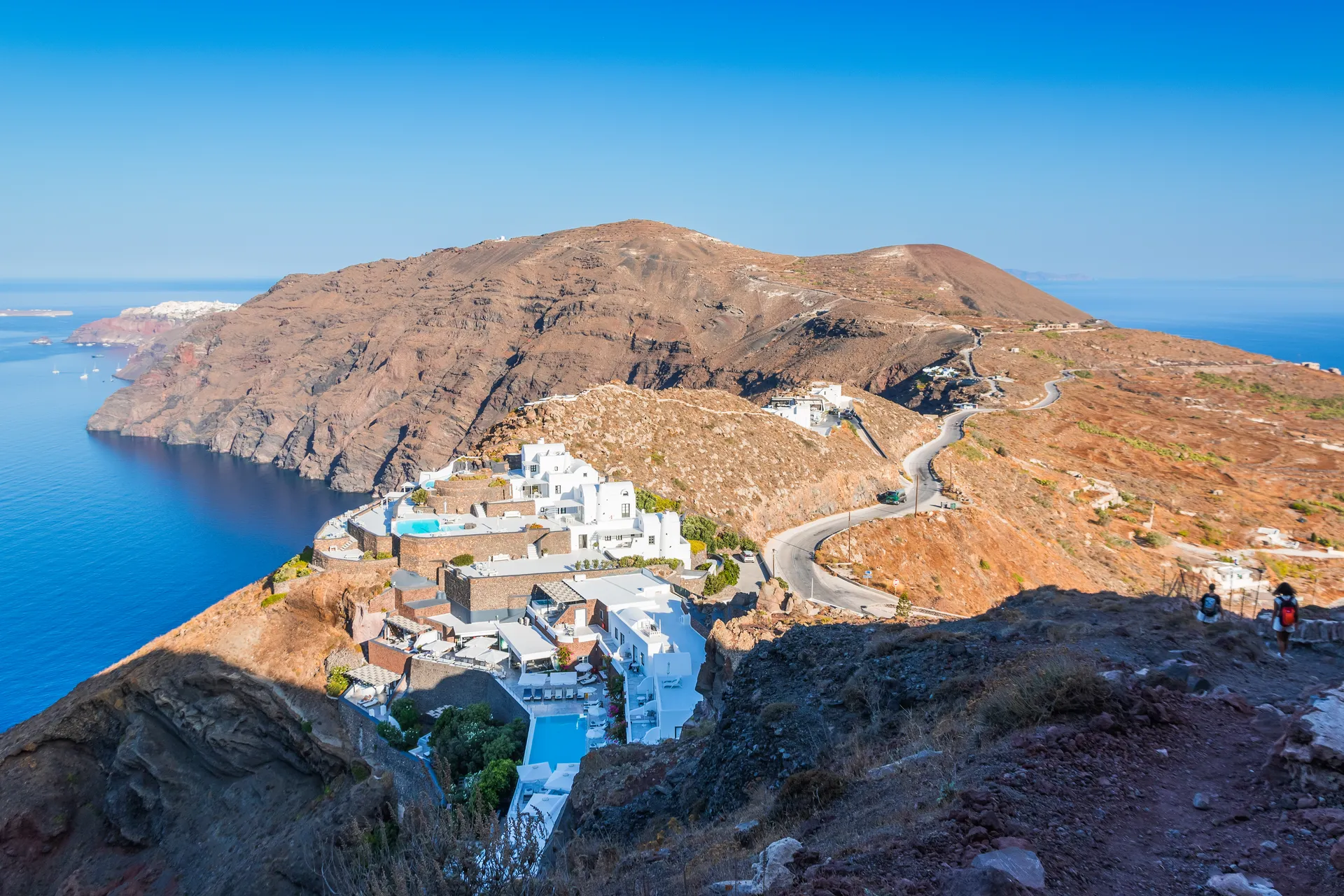
The 10-kilometre trail along the caldera rim from Fira to Oia is the single best way to understand the island's geography. The path follows the cliff edge through Firostefani and Imerovigli before descending to Oia at the northern tip, and the views are continuous and staggering: the volcanic islets of Nea Kameni and Palea Kameni sitting in the flooded crater, the far wall of the caldera across the water, and the Aegean stretching to the horizon.
The hike takes three to four hours at a moderate pace and is not technically difficult, though the path is exposed to sun and wind with no shade. Start in Fira early in the morning (before 8:00 in summer) to avoid the worst of the heat. Bring at least two litres of water, wear proper walking shoes (not sandals; the path is rocky and uneven in places), and apply sunscreen generously. The midpoint at Imerovigli offers cafes for a rest stop. Arriving in Oia around midday leaves time for lunch, a swim at Amoudi Bay, and the sunset.
Walking south to north (Fira to Oia) is preferable because it puts the caldera views ahead of you rather than at your back, and it delivers you to Oia in time for the famous sunset. Return to Fira by bus (regular service along the main road, roughly 25 minutes).
Volcano Boat Excursion
The volcanic islets at the centre of the caldera are accessible by boat from the old port of Fira (reached by cable car, donkey, or 587 steps) or from Athinios, the main ferry port. Standard excursions visit Nea Kameni, where a 20-minute hike through a lunar landscape of black lava rock leads to the crater's steaming fumaroles, then continue to Palea Kameni for swimming in volcanic hot springs, where sulphur-heated water turns the sea a milky orange-brown.
The half-day excursions (typically 10:00 to 14:30) are adequate, but the full-day versions that continue to Thirassia, the small inhabited island on the caldera's western rim, offer a more complete experience. Thirassia has a handful of tavernas, a quiet village, and the perspective of looking back at Santorini's caldera from outside, which puts the island's scale into context.
Private catamaran charters offer the same route without the crowd. Budget €500 to €800 for a half-day charter for up to eight passengers, including lunch, drinks, and swimming stops. The sunset sailing versions are popular and book out weeks ahead in peak season.
Oia Sunset
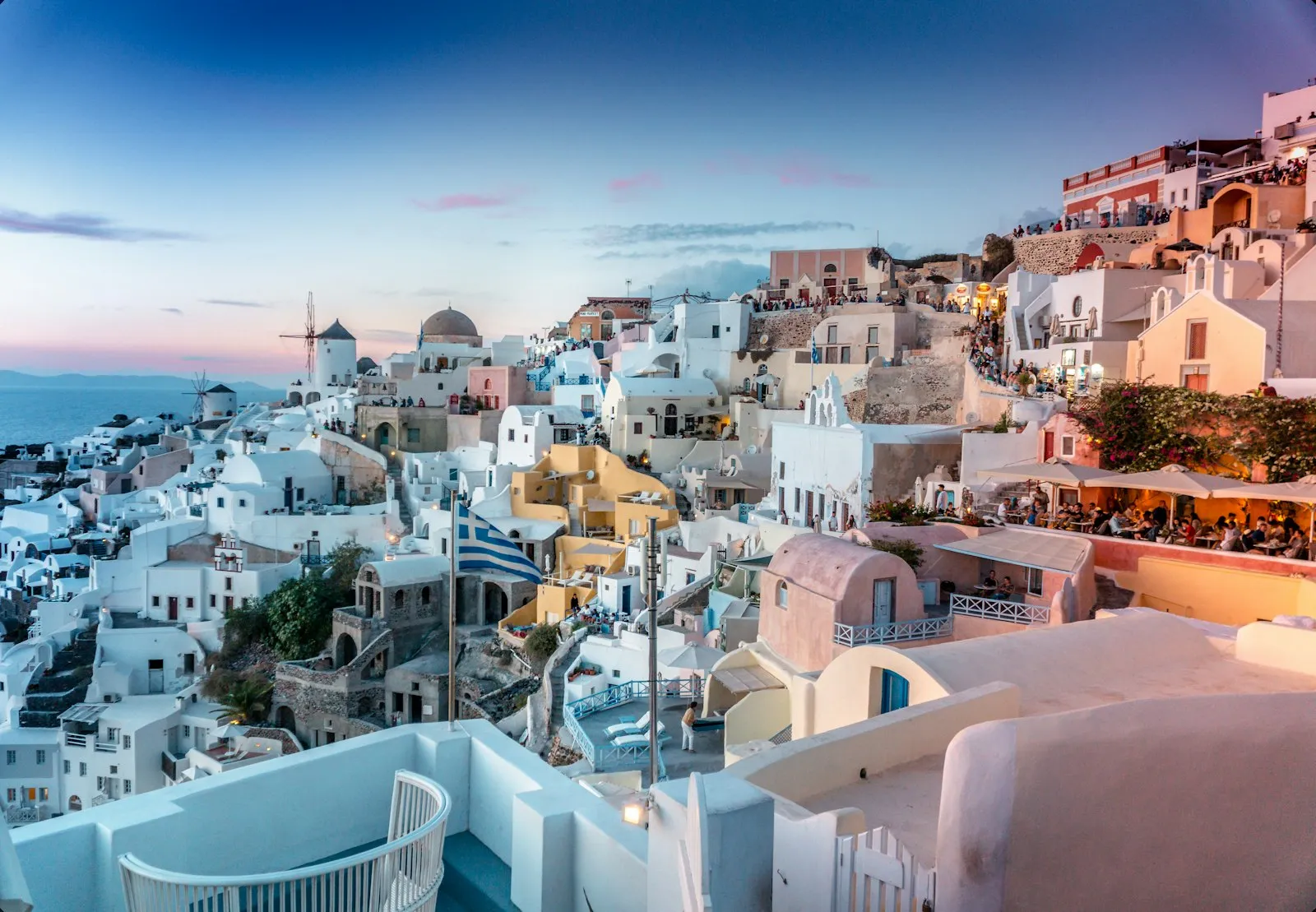
The sunset from Oia needs little introduction. Hundreds of people gather each evening at the Venetian castle ruins at the village's western tip, and on clear evenings the spectacle of the sun dropping into the caldera while the whitewashed buildings glow amber is genuinely remarkable.
The crowds, however, are intense from June through September. The castle area fills an hour before sunset, elbows are employed, and the atmosphere is more sporting event than contemplative moment. For a better experience: book a terrace table at one of Oia's caldera-facing restaurants (reserve at least two weeks ahead in summer), or skip the castle entirely and watch from the quieter viewpoints along the path between Imerovigli and Oia, where the sunset is identical and the audience is a fraction of the size.
Ancient History
Santorini's volcanic soil has preserved archaeological evidence that few Aegean islands can match. Two sites are essential.
Akrotiri
Akrotiri is the Pompeii of the Aegean, a Minoan Bronze Age settlement buried under volcanic ash during the catastrophic eruption of around 1600 BC and preserved in extraordinary detail. The excavated city, now sheltered under a massive protective roof, reveals multi-storey buildings, drainage systems, frescoes of remarkable sophistication, and a level of urban planning that speaks to a wealthy, organised society. No human remains have been found, suggesting the population evacuated before the final eruption.
The site is accessible and well-presented. Walking on elevated platforms above the excavated streets, you can look directly into rooms where clay pots still sit on shelves and painted walls survive in fragments. A guided tour (€15 to €25 for a group, available at the entrance) adds considerable depth. Budget 60 to 90 minutes.
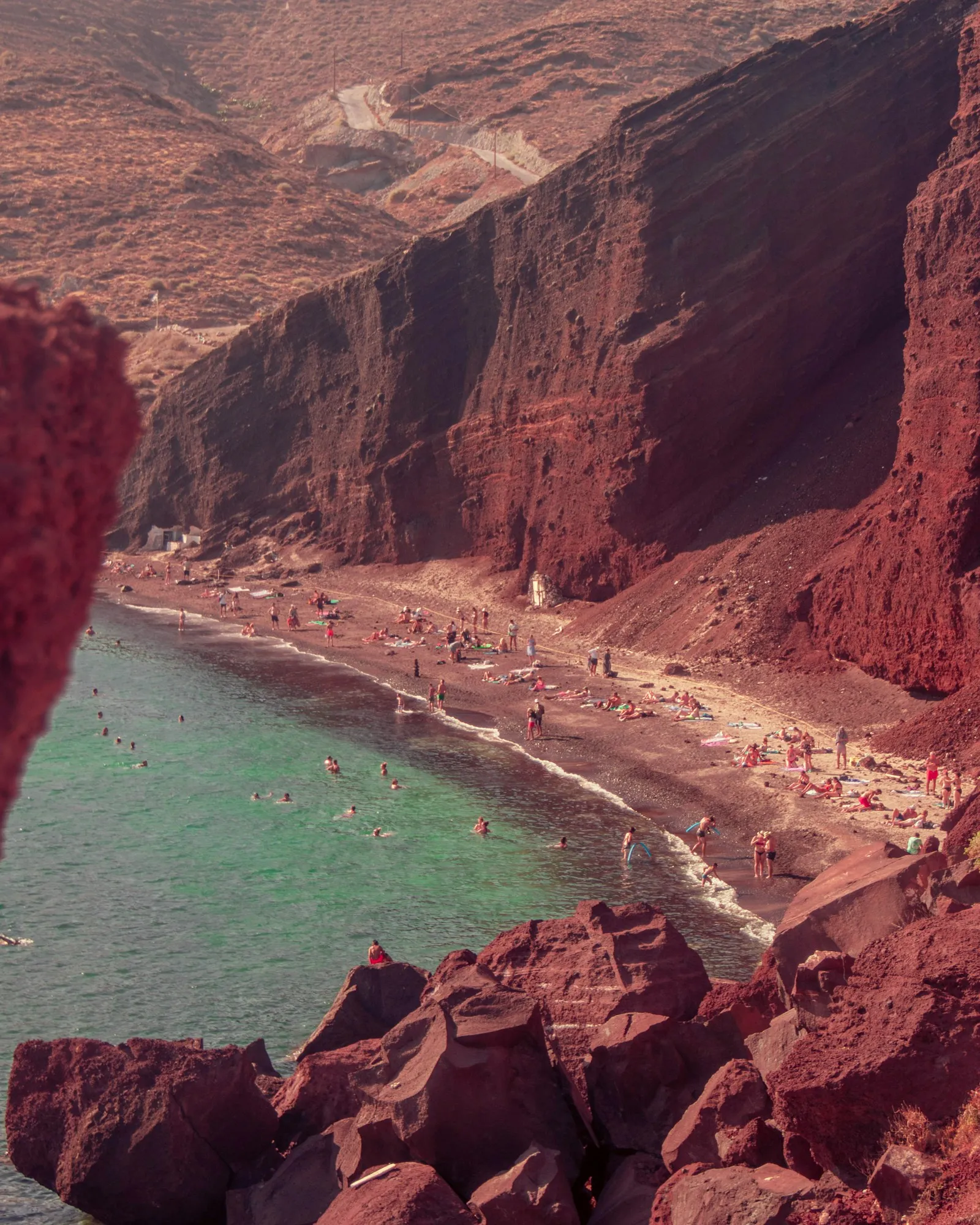
Akrotiri is on the island's southern tip, a short drive from Red Beach. Combine the two: ruins in the morning, swim in the afternoon. The site closes at 20:00 in summer but is best visited in the morning before coach tours arrive. Admission is €12.
Ancient Thera
Perched on the ridge of Mesa Vouno, the rocky headland that separates Kamari and Perissa on the east coast, Ancient Thera is a ruined city with a continuous history from the 9th century BC through the Byzantine period. The ruins themselves are modest compared to Akrotiri, scattered foundations and column fragments, but the setting is extraordinary: a narrow ridge 360 metres above the sea, with views in every direction.
The hike up from Kamari takes about 45 minutes on a paved but steep switchback path. Alternatively, a road from Perissa reaches a car park near the summit. Visit early in the morning for the best light and the least company. The site is free on certain days; check locally. Combine it with a morning at Kamari or Perissa beach below.
Wine
Santorini's volcanic terroir produces some of Greece's most distinctive wines, and the island's winery circuit is a genuine highlight rather than a tourist afterthought.
Assyrtiko and the Volcanic Terroir
The star grape is Assyrtiko, a white variety that thrives in Santorini's volcanic soil, producing wines with striking minerality, citrus acidity, and a saline quality that comes from the wind-borne sea spray. The vines are trained in a distinctive basket shape (kouloura) close to the ground, protecting the grapes from the relentless meltemi wind. Many vines are over 70 years old, and some pre-phylloxera rootstock survives here that has vanished from the rest of Europe.
Estate Argyros
One of Santorini's oldest and most respected producers, Estate Argyros farms some of the island's most prized vineyards, including plots with vines exceeding 200 years of age. The tasting room in Episkopi Gonia offers structured tastings (€15 to €35) that walk through the range from crisp young Assyrtiko to the barrel-aged Cuvee Monsignori and the sweet, concentrated Vinsanto. The latter, made from sun-dried grapes and aged in oak for years, is one of Greece's great dessert wines.
Venetsanos Winery
Dramatically built into the caldera cliff face above the old port, Venetsanos offers the most spectacular tasting-room views on the island. The wine is good (the Nykteri, a barrel-fermented Assyrtiko, is the standout), but the setting is the primary draw. The terrace looks directly across the flooded caldera, and sunset tastings here compete with Oia for the island's best golden-hour experience. Book ahead; the terrace seats are limited and coveted.
Santo Wines
The island's cooperative winery, Santo Wines sits on the caldera rim south of Fira and functions as both a large-scale tasting room and a wine education centre. The selection is broad (over 20 wines available by the glass), the caldera terrace is expansive, and the price point is accessible. It lacks the intimacy of smaller producers, but as an introduction to Santorini's wines it's efficient and informative. No booking required.
Villages
Santorini's interior villages are overlooked by visitors who rarely leave the caldera rim, and they're the best antidote to the cruise-ship density of Fira and Oia.
Pyrgos
The highest village on the island, Pyrgos is a medieval settlement built in concentric circles around a Venetian castle (kasteli) at its summit. The narrow, winding streets are free of the boutique-hotel gloss of Oia, and the views from the castle ruins encompass the entire island: caldera, coast, vineyards, and the distant profile of Crete on clear days. Several small tavernas in the village centre serve honest, well-priced food.
Franco's Cafe at the kasteli summit attracts a sunset crowd that is smaller and more local than Oia's. The experience is quieter and, arguably, superior.
Megalochori
A traditional wine village on the road between Fira and Akrotiri, Megalochori centres on a small plateia (square) shaded by bougainvillea and flanked by old canava (wine cellars) repurposed as tavernas and small hotels. The village feels lived-in rather than curated. Wander the narrow streets in the late afternoon, sit in the square with a glass of Assyrtiko, and watch the light change. Gavalas Winery, one of the island's smallest and most characterful producers, is here and worth a visit.
Emporio
The largest of Santorini's medieval fortified villages, Emporio is a labyrinth of vaulted passages, hidden courtyards, and narrow streets designed to confuse pirates. Unlike Pyrgos, which climbs a hill, Emporio spreads outward from a central tower in a defensive spiral that's disorienting and atmospheric to explore. The village has a handful of small galleries and a good bakery, but no real tourist infrastructure, which is the point.
Practical Experiences
Cooking Classes
Several operators run half-day classes focusing on traditional Santorinian cuisine: fava (the island's famous yellow split pea puree), tomatokeftedes (tomato fritters made from Santorini's intensely flavoured cherry tomatoes), and fresh seafood preparations. The best classes include a market visit and a caldera-view setting for the final meal. Budget €80 to €120 per person. Selene Meze & Wine and Petra Kouzina both run well-regarded sessions. Book two to three days ahead.
Sailing
Day sails and sunset cruises run from Vlychada marina and Ammoudi Bay. A catamaran cruise typically covers the caldera, the hot springs, Red and White beaches, and a swimming stop in a quiet cove. Full-day versions include lunch; sunset versions include dinner and wine. Group tours run €100 to €180 per person; private charters start at €500 for a half-day. The sailing itself is excellent: steady meltemi winds in summer, deep blue water, and the caldera's cliffs rising on all sides.
Scuba Diving
Santorini's volcanic underwater landscape is unusual: lava formations, hot water vents, and surprising marine life in the caldera's deep, sheltered waters. The diving here isn't coral-reef territory, but the geological formations and the visibility (often 30 metres or more) are distinctive. Several operators in Kamari and Perissa offer discover dives and certified excursions. The caldera dive, descending along the inner cliff wall, is the most memorable.
Day Trips
Thirassia
The small island across the caldera from Santorini proper is reachable by ferry or excursion boat. Thirassia has one village (Manolas), a few tavernas, and an atmosphere that feels like Santorini 40 years ago. Climb from the port to Manolas (a 20-minute uphill walk), eat lunch at one of the simple tavernas with caldera views, and take the afternoon ferry back. It's a two-to-three-hour detour that provides useful perspective on what Santorini was before the cruise ships arrived.
Anafi
For the genuinely adventurous, the small island of Anafi lies two hours southeast by ferry and receives a fraction of Santorini's visitors. Empty beaches, a dramatic monastery perched on a 450-metre rock (Kalamos), and a pace of life that the Cyclades used to be known for. A day trip is tight; an overnight stay is better. Ferries run several times per week in summer.
Getting the Most from Santorini
Santorini's caldera villages (Fira, Imerovigli, Oia) are the obvious draw, but spending every day on the clifftop risks missing what makes the island genuinely interesting. Split your time between the caldera and the interior: a morning at Akrotiri followed by an afternoon at Red Beach, a winery circuit through Megalochori and Pyrgos, and an evening in a village square rather than a tourist strip. The volcanic geology, the ancient history, and the wine culture are what separate Santorini from every other Greek island, and none of them require a sunset table booking. Choose where to stay based on which experiences matter most to you, and let the island's layers reveal themselves at a pace that suits.

More from Santorini