Best Time to Visit Phuket
Phuket's weather divides neatly into two seasons: dry (November to April) and wet (May to October). Daytime temperatures hold between 28°C and 34°C year-round, and the Andaman Sea rarely drops below 28°C. The heat is a constant. What changes is the rain, the sea state, and, consequently, the crowds and pricing. Getting the timing right determines whether you spend your mornings swimming in flat, gin-clear water or watching red flags snap in the wind above closed beaches.
Dry Season: November to April
The dry season is when Phuket delivers on the postcards. Rainfall drops to around 40mm per month at its lowest (February), humidity settles into a manageable 65 to 75 per cent, and the Andaman Sea turns calm and clear. The west coast beaches, from Mai Khao in the north to Nai Harn in the south, are at their best: safe for swimming, excellent for snorkelling, and framed by the kind of skies that make sunset drinks at Surin feel like money well spent.
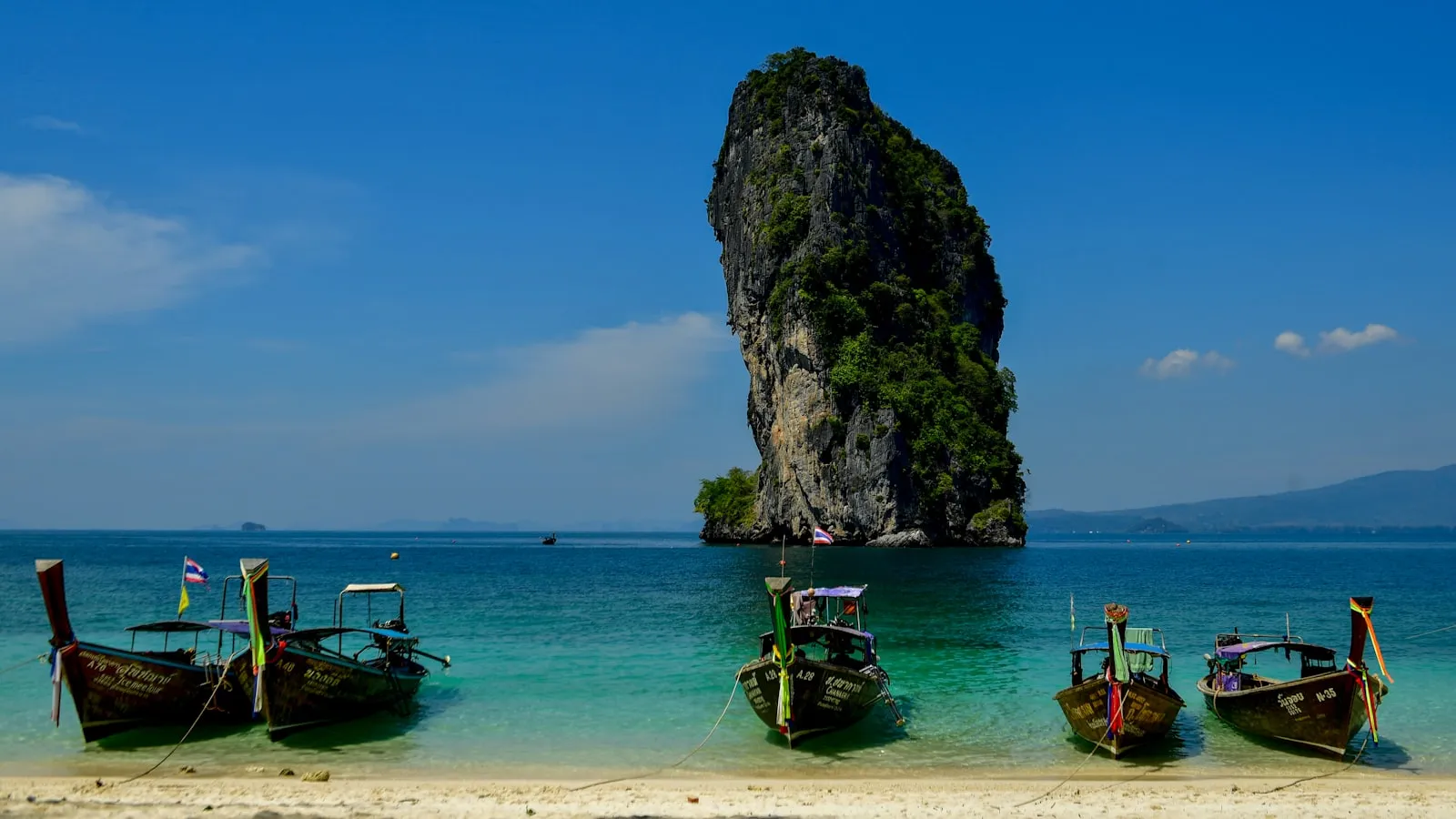
This is also when the island's marine life is most accessible. Visibility around the Similan Islands (a 90-minute speedboat ride northwest) regularly exceeds 30 metres between December and April. Phang Nga Bay trips run without weather cancellations. And the beaches that define Phuket's reputation are fully operational, with lifeguards on duty and longtail boats ferrying passengers to offshore coves.
Peak Season: December to February
The core of dry season draws the heaviest crowds. European winter-sun seekers, Chinese New Year travellers (late January or early February), and Russian holidaymakers converge simultaneously. The consequences are predictable: resort rates climb 40 to 60 per cent above shoulder-season levels, popular restaurants in Phuket Town and along the west coast require reservations, and traffic on the coastal roads between Patong and Surin thickens noticeably.
The weather justifies the premium. December through February delivers the lowest rainfall, the calmest seas, and the most comfortable humidity of the year. If your schedule is locked to these months, you'll have an excellent trip, just book early and budget accordingly.
Booking window: Reserve accommodation three to four months ahead, particularly for beachfront properties in the Surin and Bang Tao corridor. Direct flights from European and Australian hubs fill quickly over Christmas and New Year.
The Sweet Spots: November and March to April
November marks the transition from wet to dry. The last of the monsoon rains taper off by mid-month, the landscape is lush from months of rain, and the tourist machine is still warming up. Pricing sits 20 to 30 per cent below peak, availability at top-tier resorts is excellent, and the beaches are uncrowded. The only caveat is that early November can still produce the occasional heavy afternoon shower, particularly on the west coast.
March and April are the tail end of dry season, and they bring the year's hottest temperatures (regularly hitting 34°C or higher). Humidity creeps upward as the monsoon approaches, and by late April, afternoon clouds begin to build. The compensation is clear: prices drop, crowds thin, and the diving conditions at the Similans remain superb through to their seasonal closure in mid-May.
Booking window: One to two months ahead is sufficient. Last-minute deals on villas and boutique hotels are common, especially in April.
Wet Season: May to October
Phuket's wet season is often written off entirely, and that's a mistake. The monsoon brings genuine rain, averaging 250mm to 350mm per month between June and September, but the pattern is tropical rather than relentless: mornings are frequently bright and warm, with the heaviest downpours arriving in the afternoon and clearing by evening. You can eat breakfast on the beach, spend the morning in the water, and be back at your resort before the skies open.
The real issue isn't the rain. It's the sea. The southwest monsoon drives powerful swells onto the west coast beaches, creating dangerous rip currents and surf conditions that close many beaches to swimming. Red flags at Surin, Kata, and Nai Harn are common from June through September. Lifeguards are vigilant and the warnings are serious. If beach swimming is central to your trip, wet season requires a shift in expectations.
What Works in Wet Season
East coast beaches. While the west coast takes the brunt of the monsoon, the east coast remains calm and swimmable throughout. Cape Panwa, Ao Yon, and the beaches around the Royal Phuket Marina offer sheltered water when the Andaman side is off-limits.
Phang Nga Bay. The bay is sheltered from the open sea, and trips run year-round. The limestone karsts look even more dramatic wreathed in low monsoon cloud.
Phuket Town. The island's cultural heart doesn't depend on the weather. The Sino-Portuguese old town, the weekend markets, and the restaurant scene are at their best when the beach crowds thin out and the island's Thai character comes into sharper focus.
Pricing. Wet season rates are 30 to 50 per cent below peak. Five-star resorts that charge 25,000 to 40,000 baht per night in January can be had for 12,000 to 18,000 baht in July. For travellers who are flexible about beach swimming and willing to work around the afternoon rain, the value is exceptional.
The Worst Months: August and September
If there are months to genuinely avoid, these are the candidates. August and September bring the highest rainfall (300mm to 400mm), the roughest seas, and the most persistent cloud cover. Multi-day stretches of grey skies are possible, though rare. Some boat operators reduce their schedules, and the Similan Islands are closed for the season. The island feels quieter and less polished, which some travellers appreciate and others find deflating.
Weather at a Glance
- Air temperature: 28°C to 34°C year-round
- Water temperature: 28°C to 30°C year-round
- Driest months: January, February (30-50mm rainfall)
- Wettest months: August, September (300-400mm rainfall)
- Humidity: 65-75% in dry season, 80-90% in wet season
- UV index: High to extreme year-round (10-12). Sunscreen is essential regardless of cloud cover
- Sunrise/sunset: Roughly 6:15am to 6:30pm, with minimal seasonal variation
Festivals and Events Worth Planning Around
Loy Krathong (November)
Thailand's festival of lights falls on the full moon of the twelfth lunar month, usually in November. Small decorated floats (krathong) made from banana leaves, flowers, candles, and incense are released onto waterways to honour the water spirits. On Phuket, the celebrations centre on Saphan Hin park in Phuket Town, and many resorts host their own lakeside or beachfront events. The atmosphere is gentle, beautiful, and distinctly Thai.
Songkran: Thai New Year (13-15 April)
Songkran transforms Phuket into a three-day water fight. The traditional New Year celebration of gently pouring water over elders' hands has evolved into a nationwide festival of water guns, hoses, and pickup trucks loaded with barrels and ice. Patong's Bangla Road becomes the epicentre on the island: soaked, chaotic, and exhilarating. If you're here over Songkran, embrace it. If you'd rather not be drenched while walking to dinner, stay at a resort outside the main tourist strips.
Phuket Vegetarian Festival (September/October)
Nine days of rituals, street processions, and extraordinary vegetarian street food centred on the Chinese shrines of Phuket Town. The festival's more extreme elements (firewalking, body piercing) attract attention, but the real draw for visitors is the food: stalls throughout the old town serve exceptional meat-free dishes, many unavailable at any other time of year. The atmosphere is intense, colourful, and culturally fascinating.
Regional Considerations
Phuket is small enough (roughly 50 kilometres north to south) that weather doesn't vary dramatically across the island. That said, there are useful differences.
West coast: Bears the full force of the southwest monsoon. Best in dry season (November to April), when beaches are calm and swimming is safe. Roughest in wet season, when red flags are common.
East coast: Sheltered from the monsoon swell. Calmer year-round, with muddier beaches but safer swimming during wet season. The east coast resorts are a strong wet-season base.
Northern beaches (Mai Khao, Nai Yang): Slightly drier than the south, with larger, emptier beaches that absorb monsoon conditions more gracefully. The Sirinat National Park coastline here is beautiful even on grey days.
Phuket Town: Unaffected by sea conditions. The old town's restaurants, markets, and cultural life are best enjoyed on cooler evenings, making the shoulder months and early wet season surprisingly pleasant.
When to Book
- Peak season (December-February): Book 3 to 4 months ahead for resorts, 2 months for flights
- Sweet spots (November, March-April): Book 1 to 2 months ahead; good last-minute availability
- Wet season (May-October): Book 2 to 4 weeks ahead; genuine deals available throughout
- Flights: Phuket International (HKT) is well connected to Bangkok, Singapore, Kuala Lumpur, and direct European charters in winter. Peak-season European routes book quickly; secure flights before accommodation.
The Verdict
For the best combination of weather, value, and crowd levels, target November or March to April. You'll get dry-season conditions without the peak-season crush: calm seas, reliable sunshine, strong availability at the island's best resorts, and beaches that feel spacious rather than contested.
If your dates are fixed to December or January, Phuket still rewards handsomely. The weather is at its finest, and the full spectrum of things to do is available. Budget for the premium and book early.
Wet season is not a write-off. For flexible travellers comfortable with afternoon rain and willing to trade west-coast swimming for east-coast calm, the 30 to 50 per cent savings on accommodation and the quieter pace of the island make May through October a genuine option. Just pack a waterproof and check the beach flags before swimming.

More from Phuket